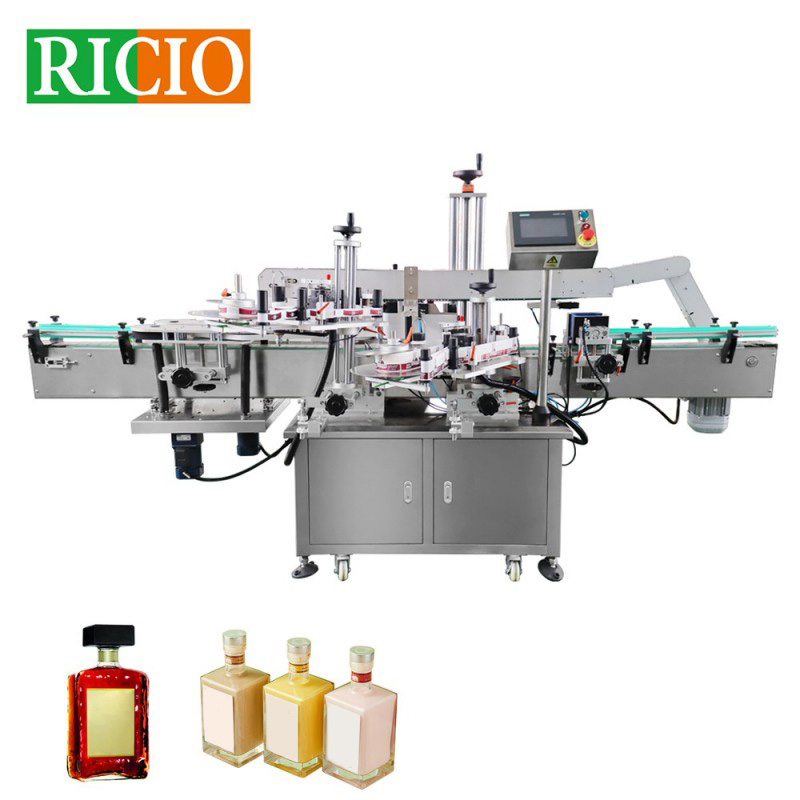
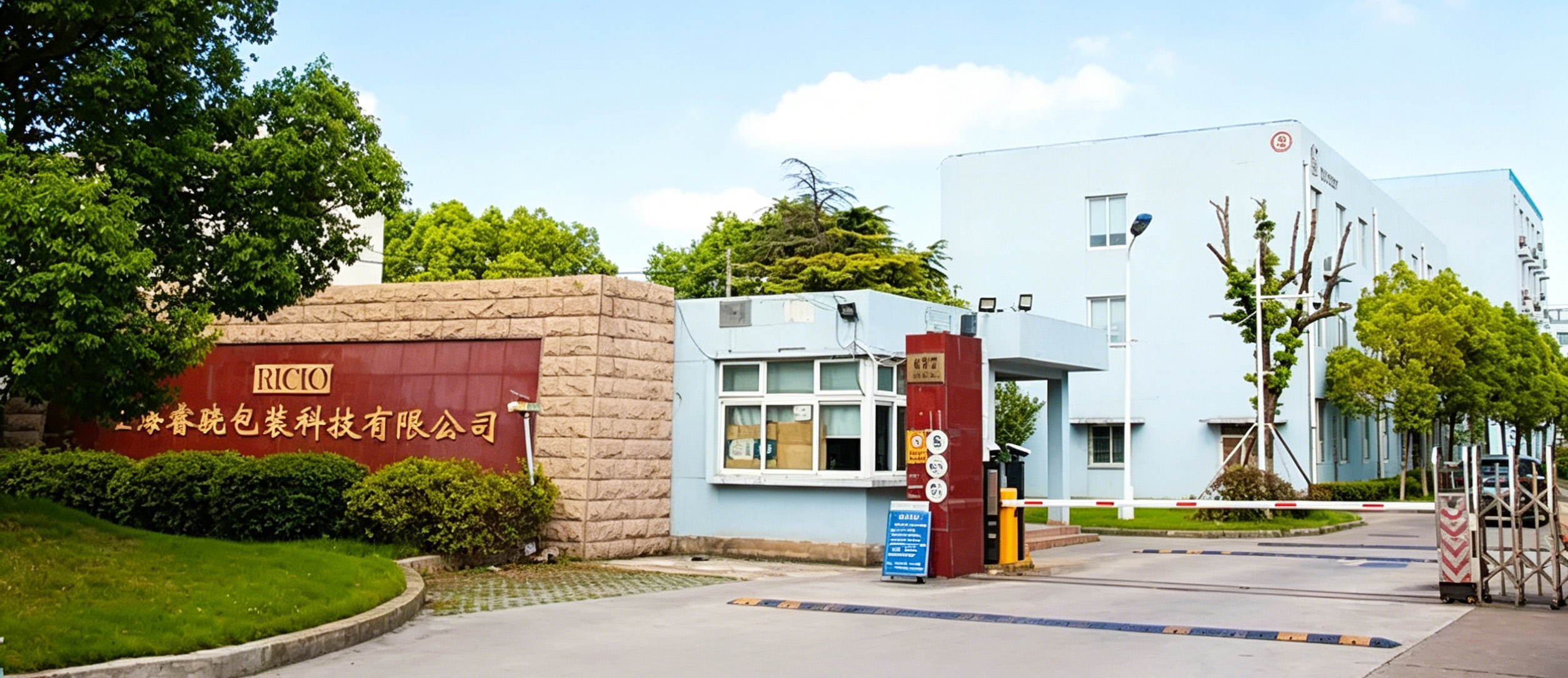
As China OEM Square Bottle Label Applicator Manufacturer and ODM Square Bottle Labeling Machine Supplier, RICIO engages in the R&D and manufacturing of labeling machinery and is headquartered in Shanghai, China. RICIO's manufacturing foundation stems from the strategic acquisition of Shanghai Zhenbao Machinery Parts Factory, a well-established local machining enterprise. This integration has transformed us from a simple equipment assembler into a source manufacturer with in-house precision machining capabilities.
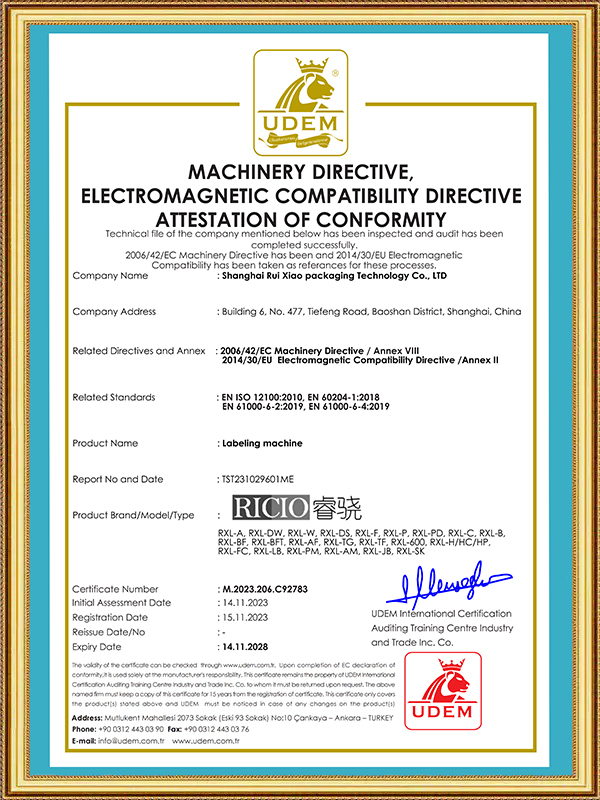
We are equipped with multiple CNC machining centers and an experienced technical team. From core component machining to complete machine assembly and commissioning, the entire process strictly adheres to the ISO 9001 international quality system, ensuring that every machine we deliver is built with a foundation of stable and reliable operation.
The direct conclusion: In-line print and apply labeling delivers the highest labeling accuracy and speed for variable-data packaging lines. When a packaging line must apply unique barcodes, lot numbers, expiration dates, or shipping labels without stopping, an in-line print-and-apply system is the ...
Why Coding on Bottle Labels Demands Precision Machinery
Coding directly onto bottle labels – not the bottle itself – has become the preferred method for beverage, pharmaceutical, and cosmetic manufacturers who need high-contrast, scannable date codes, lot numbers, and barcodes. Unlike direct‑to‑con...
What Is an Automatic Box Labeling Machine – And Why You Need One
An automatic box labeling machine is a piece of packaging equipment designed to apply pressure‑sensitive labels onto corrugated cartons, cardboard boxes, and similar containers without manual intervention. It eliminates the inconsiste...
Square bottle labeling machines and square bottle label applicators sit in one of the more demanding corners of packaging automation. Because square and rectangular containers don't spin smoothly on a carousel the way round bottles do, the accuracy of the applicator head, the timing of the label dispensing cycle, and how the machine reads bottle position all matter more than they would on a round-bottle line, where a slight rotation error is far less visible. What follows is less a product pitch and more a working look at how labeling precision and speed are actually achieved, which production variables change machine selection, how environmental and customization needs get folded into a build, and what ongoing support for this kind of equipment tends to look like in practice.
Precision and Speed Benchmarks for Square Bottle Applicator Heads
At Shanghai RICIO Packaging Technology Co., Ltd, square bottle labeling lines are built around a well-known advanced servo motor brand paired with an AI intelligent/smart automation system and a leading control system, which is largely why labeling precision on these applicators can hold to ±0.5mm. On a square bottle, that tolerance is what keeps a label from creeping toward a corner seam or drifting off a flat panel over a long production run, where even a small skew becomes obvious on a straight edge in a way it wouldn't on a curved surface.
Under theoretical conditions, that same system can push labeling speed on a square bottle labeling machine up to 700 pieces per minute, though real-world output flexes with machine parts configuration, label size, bottle panel size, and whatever other equipment sits upstream or downstream on the packaging line. For the exact figures that apply to a specific build, the instructions manual or a direct conversation with customer service is a more reliable reference than any general number.
Container Shape, Size, and Label Type: What Actually Changes on the Line
Not every square bottle labeling machine is set up the same way once you look at what's actually coming down the conveyor. The labeling machine setup at Shanghai RICIO Packaging Technology Co., Ltd is typically discussed against four categories of input before any solution is proposed, and each one shifts how the applicator head is configured. Square, rectangular, glass, or plastic containers all put slightly different demands on an applicator, and a transparent label behaves differently under sensor detection than a traditional opaque one.
Information typically gathered before configuring a square bottle label applicator
Category
Examples
Container shape / size / material
Square bottle, glass, plastics, carton, or a special container shape
Label type / size
Transparent label or traditional opaque label
Production line environment
Dust-proof or water-proof level requirements
Output and performance targets
Daily output, labeling speed, labeling precision, other line-specific needs
The more specific this information is going in, the sooner a workable configuration for a given square bottle label applicator can be put together — vague requests tend to circle back for the same four data points before a solution can be recommended.
Environment Requirements and OEM+ODM Customization for Square Bottle Lines
Where a labeling machine physically sits changes what it needs to survive. A production floor with heavy dust, moisture, or wash-down cycles calls for different sealing and enclosure choices than a clean, climate-controlled packaging room, which is why dust-proof or water-proof level requirements are asked about alongside daily output targets and any other line-specific need. Square bottle formats also vary a great deal by industry — a flat panel sized for a large product label, a narrower panel needing pinpoint edge alignment, or a bottle running alongside coding or inspection equipment — so a fixed, one-size configuration rarely covers everyone.
That is where in-depth machine parts configuration customization, offered as OEM and ODM services, gets built around each layout at Shanghai RICIO Packaging Technology Co., Ltd, aimed at seamless integration with a customer's existing production line requirements.
What After-Sales Support Looks Like Once the Machine Is Running
Getting a labeling machine installed is really the start of a longer relationship, not the end of the project. For square bottle labeling equipment specifically — where fine alignment and label-to-panel registration need to hold up continuously, not just on day one — being able to get a fast answer when something drifts out of tolerance matters as much as the original machine specification. Response within 24 hours is the baseline, backed by remote online video guidance to work through issues in detail, and, when someone is needed on-site, experienced after-sales service engineers can visit the factory, workshop, or production line for installation, commissioning, and training in person.
Shanghai RICIO Packaging Technology Co., Ltd frames this as lifelong technical support, including free replacement of vulnerable spare parts and some consumables while a machine is under warranty — the kind of ongoing coverage that keeps a square bottle label applicator running at the precision it was built for, rather than treating support as a one-time installation event.
Frequently Asked Questions
What's different about a square bottle labeling machine compared to one built for round bottles?
The applicator has to register the label against a flat panel and a corner edge rather than a continuously curving surface, so positioning accuracy carries more weight. A servo-driven, AI-based control system is what allows precision to hold to ±0.5mm on that kind of geometry.
How fast can a square bottle label applicator actually run?
Up to 700 pieces per minute theoretically, though the real number for a given line depends on machine parts configuration, label size, and the other equipment it runs alongside.
Can these machines handle transparent labels on square bottles?
Yes — label type and size, including whether it's transparent or a traditional opaque label, is one of the first things factored into the applicator configuration.
Our factory environment is dusty or requires wash-down. Does that change the setup?
It does. Dust-proof or water-proof level requirements are part of the standard information gathered before a configuration is recommended.
What kind of support is available after installation?
A 24-hour response commitment, remote video guidance, on-site engineer visits when needed for installation, commissioning, and training, and lifelong technical support that includes free replacement of vulnerable spare parts and some consumables under warranty.

 English
 русский
 Español
 عربى


 +86 13681850339
 sales@raxpack.com
 Building 6, No. 477 Tiefeng Road, Baoshan District, Shanghai, China
