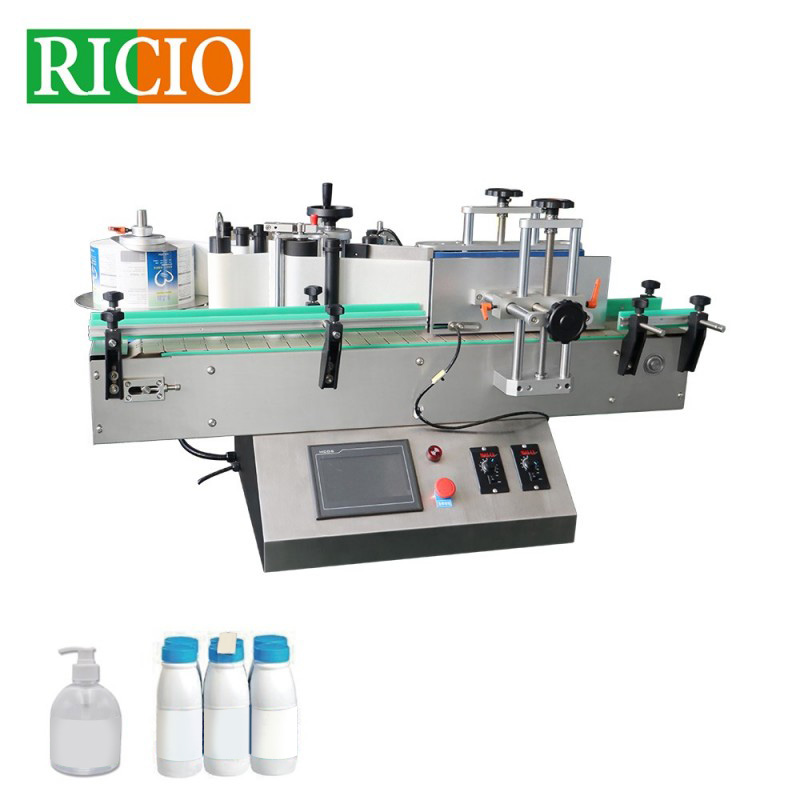
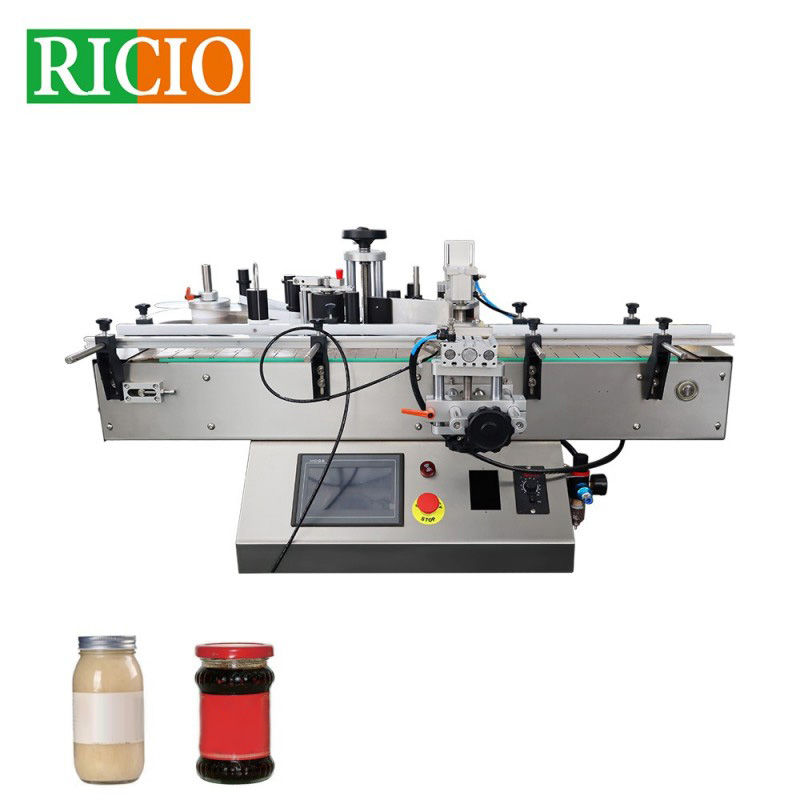
Tabletop labeling machine is designed to achieve rational production goals. The labeling process is automated, with simple operation, fast production speed, unified, beautiful and neat labeling position; it is suitable for circular container labeling in pharmaceutical, chemical, food and other industries, and can be labeled throughout the full circumference and semi-circumference labeling
RICIO
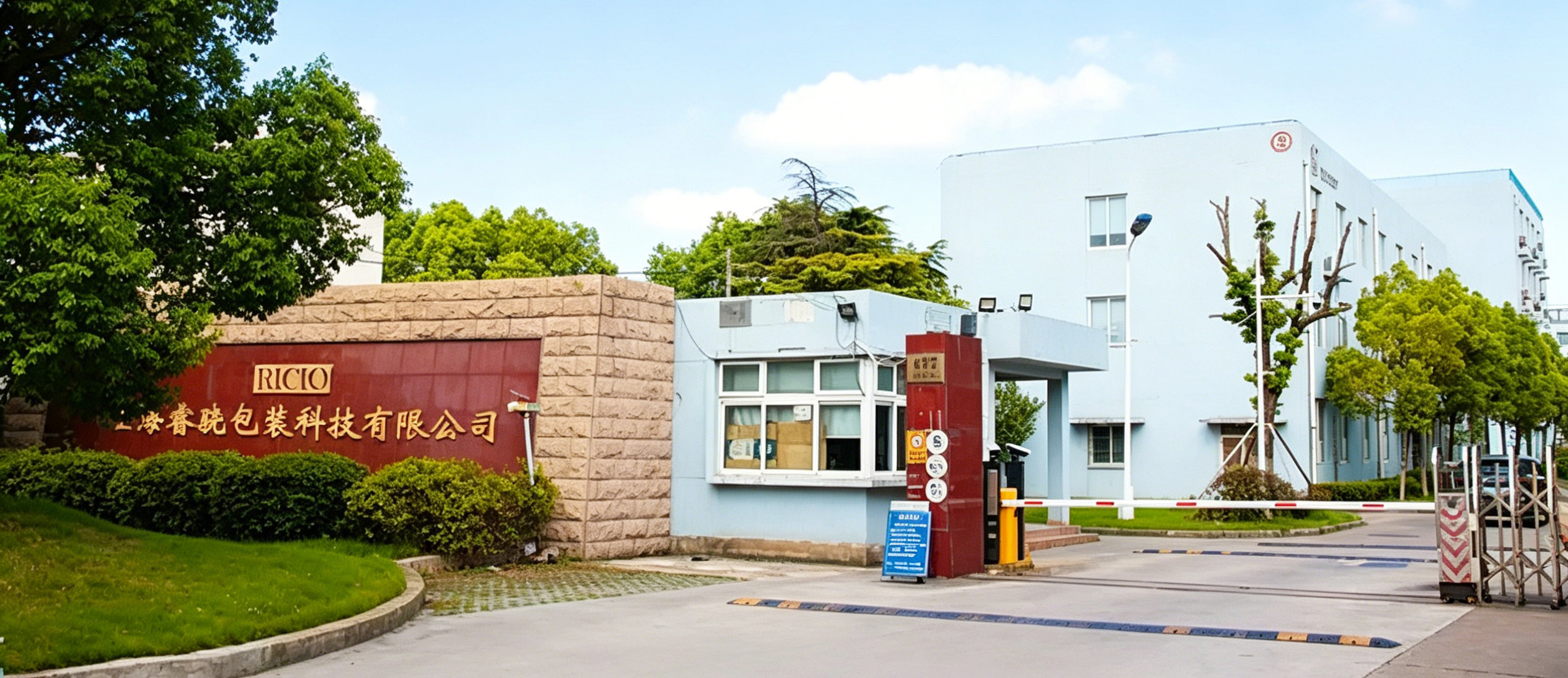
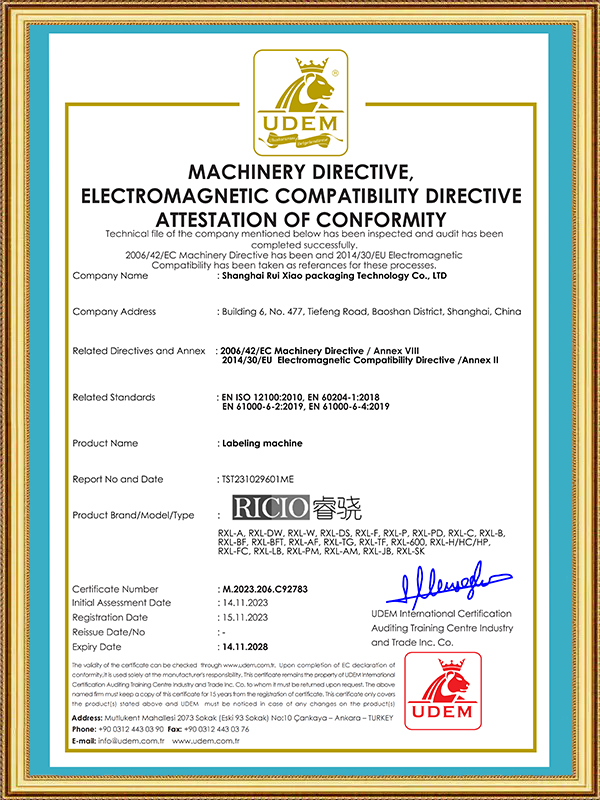
Shanghai Ruixiao Packaging Technology Co., Ltd.
As China OEM Tabletop Bottle Labeling Machine Manufacturer and ODM Tabletop Labeling Machine Supplier, RICIO engages in the R&D and manufacturing of labeling machinery and is headquartered in Shanghai, China. RICIO's manufacturing foundation stems from the strategic acquisition of Shanghai Zhenbao Machinery Parts Factory, a well-established local machining enterprise. This integration has transformed us from a simple equipment assembler into a source manufacturer with in-house precision machining capabilities.
We are equipped with multiple CNC machining centers and an experienced technical team. From core component machining to complete machine assembly and commissioning, the entire process strictly adheres to the ISO 9001 international quality system, ensuring that every machine we deliver is built with a foundation of stable and reliable operation.
The direct conclusion: In-line print and apply labeling delivers the highest labeling accuracy and speed for variable-data packaging lines. When a packaging line must apply unique barcodes, lot numbers, expiration dates, or shipping labels without stopping, an in-line print-and-apply system is the ...
Why Coding on Bottle Labels Demands Precision Machinery
Coding directly onto bottle labels – not the bottle itself – has become the preferred method for beverage, pharmaceutical, and cosmetic manufacturers who need high-contrast, scannable date codes, lot numbers, and barcodes. Unlike direct‑to‑con...
What Is an Automatic Box Labeling Machine – And Why You Need One
An automatic box labeling machine is a piece of packaging equipment designed to apply pressure‑sensitive labels onto corrugated cartons, cardboard boxes, and similar containers without manual intervention. It eliminates the inconsiste...
A tabletop labeling machine applies labels to bottles, jars, and similar containers on a workbench-scale unit, without the conveyor length or footprint of a full production-line labeler. The category covers manual-feed units, semi-automatic tabletop machines, and belt-driven models built for front, back, wrap-around, or top labeling. A tabletop bottle labeling machine narrows that scope specifically to round or near-round bottles, using a rotating cradle or driven belt to turn the container evenly under the label head as it applies. Together these machines fill the gap between hand-labeling and full industrial lines — a common choice for beverage fillers, cosmetics packers, and household chemical producers running batches too small to justify a conveyorized system but too large to label by hand.
Choosing the Right Setup for Container Shape and Batch Size
Shanghai RICIO Packaging Technology Co., Ltd. builds its Tabletop Labeling Machine range around this middle tier of production, where container geometry and batch size decide which configuration actually works. Round bottles with a consistent diameter run well on a belt-and-wheel drive, since the container simply rolls under the label head at a steady speed. Oval, square, or tapered containers need a different approach — usually a mandrel or a stop-and-apply cycle — because a rolling motion would skew the label. Batch size matters just as much: a line changing over between several SKUs in a shift benefits from tool-free guide adjustments, while a single-product run can use fixed guides set once and left alone.
Container Shape
Typical Drive Method
Best-Fit Batch Pattern
Round bottles
Belt or wheel rotation
Continuous single-SKU runs, quick changeover
Oval / square
Mandrel or indexed stop
Mixed-SKU, moderate changeover frequency
Tapered / conical
Indexed stop with cradle
Small batches, frequent changeover
Table 1. General guidance on matching drive method to container shape — not specific machine parameters.
Where Precision Actually Comes From on a Tabletop Line
Placement accuracy on a tabletop bottle labeling machine comes down to how tightly the mechanical components are toleranced and how repeatable the label head's stop-and-apply timing is, not just the presence of sensors. RICIO machines core components in-house on its own equipment rather than sourcing generic parts, and the same team that machines those parts also handles assembly and commissioning, which keeps tolerances consistent from one unit to the next. That approach reflects a priority the company states directly in its own philosophy — precise labeling backed by close quality control — rather than treating accuracy as a number on a spec sheet. In practice, buyers weigh several factors against each other when comparing tabletop options, and they rarely all point the same direction.
Typical Trade-Off Pattern Buyers Weigh
Illustrative pattern: compact tabletop machines are commonly chosen to prioritize precision and footprint, with changeover speed and raw throughput weighed as secondary factors depending on the production line.
Changeover Time Depends on Label Format, Not Just Bottle Size
Two bottles of different sizes but the same label format usually take a few minutes to switch between on a tabletop line — mostly guide adjustment. Moving between label formats is the bigger time cost, since the rotation and stop points need to be recalibrated for how the label wraps around the container.
Typical changeover ranges for reference only; actual times vary with operator familiarity and label stock.
Supporting Long Production Runs Across Different Markets
A tabletop labeling machine bought for one product line often ends up handling several, as export destinations and label requirements shift over the years. Consistent parts sourcing and supply chain management keep replacement parts and turnaround predictable even years after the original purchase, which matters more than most buyers expect until a machine is already in daily use for a while. RICIO's own customer base — spread across more than 40 countries and regions, including the United States, Germany, Japan, South Korea, Australia, Russia, India, Brazil, and South Africa — reflects the kind of long-term relationship this equipment is meant to support. Some of those customers have gone on to work with RICIO as an ongoing partner for further tabletop bottle labeling machine orders and related packaging equipment, rather than a one-time purchase.
Frequently Asked Questions
Can one tabletop labeling machine handle both round and non-round bottles?
Not usually without changing the drive mechanism or guides. A belt-driven cradle built for round bottles won't hold an oval or square container steady enough for accurate placement, so switching container families generally means adjusting or swapping that part of the machine rather than resetting a sensor.
How long does a changeover between label formats typically take?
It depends more on the label format than the bottle itself — moving from a single front label to a wrap-around design usually adds more changeover time than switching between two front-labeled bottles of different sizes, since the wrap-around setup needs rotation and stop points recalibrated.
Is a tabletop machine only suitable for very small production runs?
Not necessarily. The practical ceiling is usually set by how many hours a day the line runs and how often SKUs change, not by an absolute unit count — a single-SKU operation running steady shifts can produce meaningfully more than a mixed-SKU line that changes over several times a day.

 English
 русский
 Español
 عربى
عربى

 +86 13681850339
  sales@raxpack.com
 Building 6, No. 477 Tiefeng Road, Baoshan District, Shanghai, China