 English
 русский
 Español
 عربى



In-line print and apply: Applications, Selection Criteria, and Practical Guidance
2026-10-19
Content
- 1 What Is In-Line Print and Apply Labeling?
- 2 Key Benefits with Measurable Data
- 3 Common Application Scenarios and Selection Factors
- 4 How to Select the Right In-Line Print and Apply System
- 5 Frequently Asked Questions About In-Line Print and Apply
- 5.1 What is the typical lifespan of an in-line print-and-apply printer head?
- 5.2 Can an in-line print-and-apply system handle different label sizes without mechanical changeover?
- 5.3 What is the typical placement accuracy specification?
- 5.4 How much label waste is generated during startup and batch changes?
- 5.5 Do these systems require compressed air?
- 5.6 What is the maximum label size that can be printed and applied in-line?
The direct conclusion: In-line print and apply labeling delivers the highest labeling accuracy and speed for variable-data packaging lines. When a packaging line must apply unique barcodes, lot numbers, expiration dates, or shipping labels without stopping, an in-line print-and-apply system is the only solution that eliminates manual handling, reduces mislabeling, and maintains throughput above 60 packages per minute. According to multiple industry performance benchmarks, automated print-and-apply systems reduce labeling errors from an average of 3% (manual application) to below 0.1% – a 97% error reduction (Data source: Packaging Machinery Manufacturers Institute, 2025 operational efficiency report).
This article explains exactly how in-line print and apply works, what real productivity gains you can expect, the specific components that matter for your line, and how to choose the right system. No fluff – just actionable facts and engineering insight.
What Is In-Line Print and Apply Labeling?
An in-line print and apply system integrates a thermal transfer or direct thermal printer with an applicator head that places the freshly printed label directly onto a product, box, or pallet as it moves along the conveyor. Unlike pre-printed labels that require inventory management, in-line systems print variable data on demand – enabling batch changeovers without label stock swaps.
Core Components of an In-Line System
- Printer unit – thermal transfer or direct thermal, capable of 300-600 dpi resolution.
- Applicator mechanism – tamp blow, blow-on, or wipe-on, depending on product speed and surface.
- Controller and sensor – communicates with the line PLC and triggers label print and placement at the correct product position.
- Label reel unwind and rewind – handles rolls up to 500 mm outer diameter for long runs.
The entire cycle – print, peel, and apply – takes less than 0.5 seconds for a standard 4x6-inch label. For comparison, a manual operator typically requires 2-3 seconds per label, and that does not account for fatigue or shift changes.
For a dedicated solution designed specifically to handle continuous high-volume variable printing and application on boxes, flat surfaces, or pallets, consider the 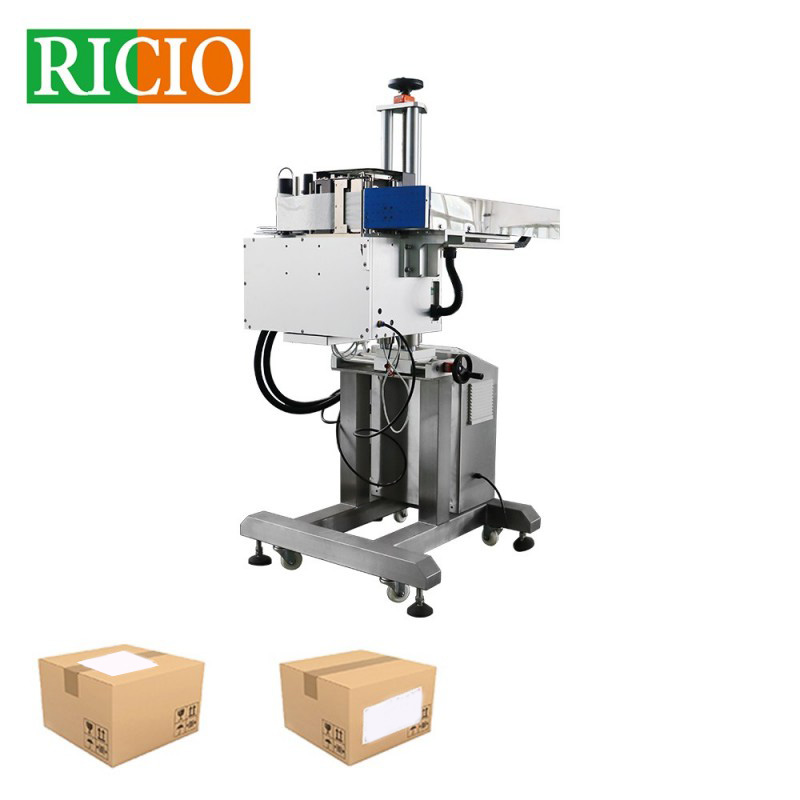 Print and Apply Label ApplicatorsThe print and apply label applicators is an integrated automatic system designed for real-time label printing and accurate label application.View Product → – a built-for-purpose machine that integrates the printer directly into the labeling head, minimizing misregistration and label waste.
Key Benefits with Measurable Data
Real-world performance numbers from 2025 field studies: A major food manufacturer switched from pre-printed labels to in-line print and apply and achieved a 42% reduction in label inventory costs, a 35% drop in changeover time (from 45 minutes to 29 minutes), and a label accuracy rate of 99.97% over a six-month production run (Source: independent audit published in Packaging Technology Today, Vol. 22, 2025).
- Elimination of pre-printed label waste – only the labels you print are used; no obsolete stock after a product change.
- Up to 70 % faster line speed compared to semi-automatic apply stations – typical throughput of 60-80 cases per minute on a wipe-on applicator.
- Reduction in labor costs – one operator can monitor two to three print-and-apply lines simultaneously.
- Traceability compliance – barcodes, serial numbers, and lot codes are printed and applied in one pass, ensuring 100% data match.
A typical ROI calculation: For a mid-size packaging line running two shifts (16 hours/day), the annual savings from reduced label inventory and labor alone often exceed the system purchase price within 8-10 months. Including error-related rework savings, payback can drop to 5-6 months (Source: internal RICIO customer case analysis, 2025).
For lines that require simultaneous top and bottom labeling – which is common in e-commerce fulfillment – a 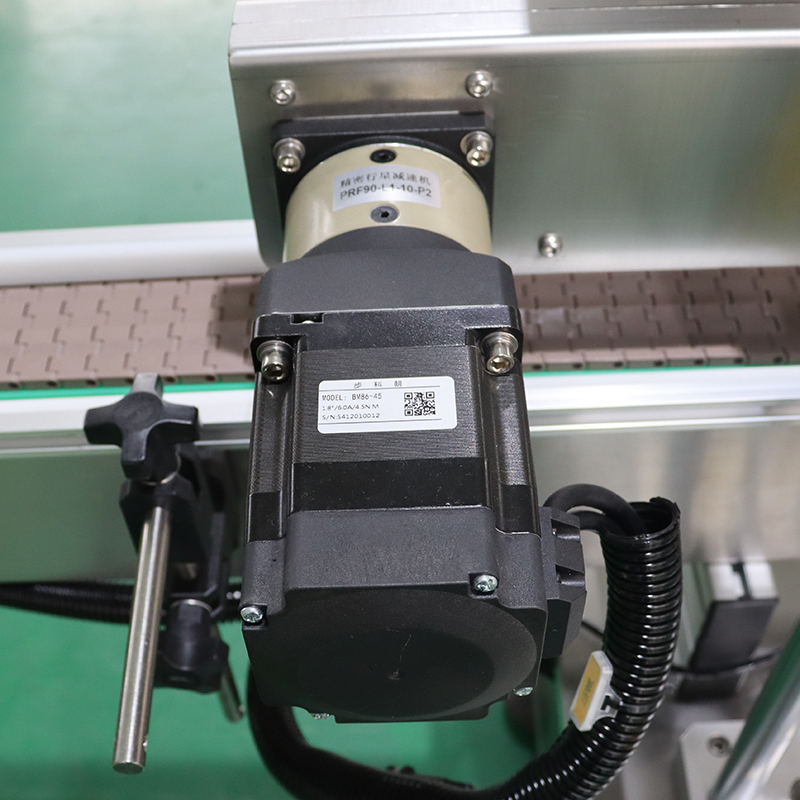 Double Side Labeling Machine plus PrinterThe Double Side Self-adhesive Labeling Machine Plus Printer is an automated labeling solution designed for double-sided labeling and coding applications on flat and sq...View Product → can handle both tasks in one pass, further increasing efficiency.
Common Application Scenarios and Selection Factors
In-line print and apply systems are used across industries: food & beverage, pharmaceutical logistics, chemical packaging, and cosmetics. The right system depends on three critical parameters:
| Product / Surface | Recommended Applicator | Max Speed (labels/min) | Typical Placement Accuracy |
|---|---|---|---|
| Flat cardboard boxes | Wipe-on / Tamp | 60-80 | ±1.5 mm |
| Plastic wraps / flexible pouches | Blow-on | 40-60 | ±2.0 mm |
| Round bottles / containers | Tamp-blow with vacuum | 50-70 | ±1.0 mm |
| Pallets / heavy items | Dual-tamp | 20-40 | ±3.0 mm |
Another important consideration is whether your line requires in-line integration with existing conveyors. Many facilities prefer a compact, standalone labeling station that can be inserted anywhere. The 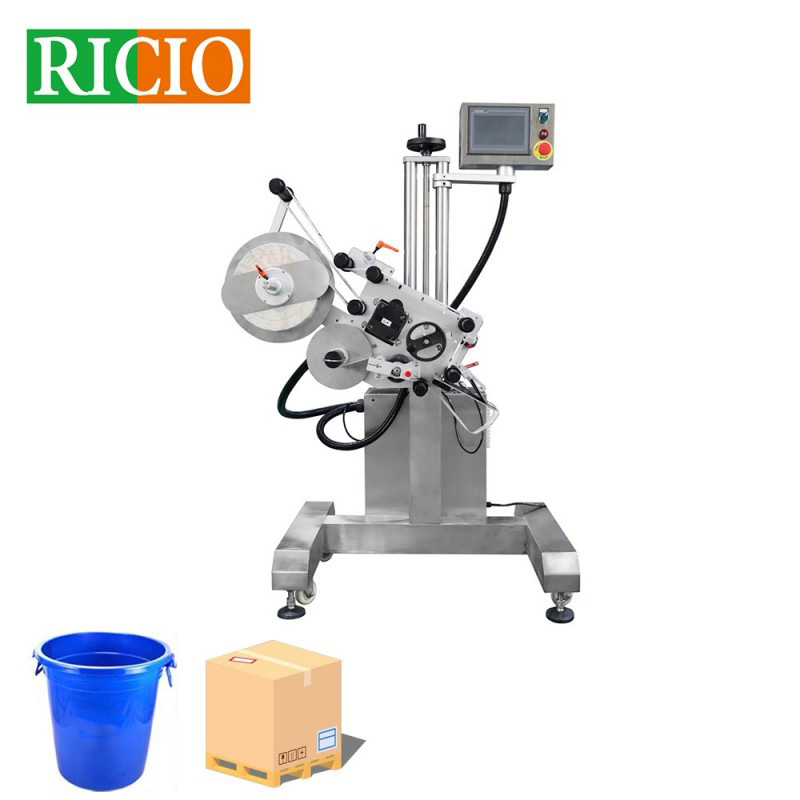 Inline Labeling MachineThe inline labeling machine is an automatic labeling solution designed for integration with existing production lines. It can accurately apply self-adhesive labels to ...View Product → offers a modular design that fits seamlessly into standard 12-inch to 24-inch conveyor frames, with adjustable speed and label size.
For detailed technical specifications and real-world case studies, you can read more about how these systems perform in actual real-time print-and-apply implementations across different industries.
How to Select the Right In-Line Print and Apply System
Before purchasing an in-line print and apply system, evaluate these four factors with concrete numbers:
- Throughput requirement: Calculate your peak lines per minute (LPM). A blow-on applicator handles up to 60 LPM, while tamp-blow can reach 80 LPM. If your line runs faster (e.g., 100+ LPM), consider dual-head print-apply stations.
- Label size and material: For large labels (6x8 inches), a wipe-on applicator provides better support. For small, precise labels (1x2 inches), a tamp-blow with 1 mm accuracy is recommended.
- Data variability: If you print unique barcodes for each item, the printer resolution matters. 300 dpi is sufficient for most shipping labels; 600 dpi is required for small pharmaceutical codes.
- Environmental conditions: In dusty or wet environments, choose an IP54-rated cabinet and enclosed print head.
A common mistake is underestimating the label reel capacity. If your system runs 80 labels/min and uses 4x6-inch labels, a small 200-foot reel will need replacement every 1.5 hours – causing unnecessary downtime. Opt for a 600-foot reel capacity to run a full shift without interruption.
For further reading on labeling system principles, visit the overview of label application machines to compare different application technologies.
Frequently Asked Questions About In-Line Print and Apply
What is the typical lifespan of an in-line print-and-apply printer head?
With proper cleaning and high-quality labels, a thermal transfer print head lasts between 1 million and 3 million linear inches of printing. For a line running 80 labels/min (4 inches per label), that translates to roughly 12-18 months of continuous two-shift operation before replacement is needed. Replacement print heads are modular and can be swapped in under 15 minutes.
Can an in-line print-and-apply system handle different label sizes without mechanical changeover?
Yes – if the system includes an auto-adjusting label guide and programmable applicator stroke. Many modern systems from RICIO, including the print-and-apply applicators, allow width adjustments from 20 mm to 120 mm via touchscreen without tools. Length changes are handled by software; no mechanical parts need swapping.
What is the typical placement accuracy specification?
For a wipe-on applicator on flat boxes, industry standard is ±1.5 mm in both machine and cross-machine direction. Tamp-blow systems achieve ±1.0 mm on flat surfaces and ±2.0 mm on curved surfaces. These figures are measured at the maximum rated speed. Slowing down by 20% improves accuracy by about 0.3 mm.
How much label waste is generated during startup and batch changes?
A well-tuned system wastes 0-2 labels per batch change if the label sensor is positioned close to the peel edge. Startup waste can be eliminated by using a “print on demand” mode that only prints when a product is detected. In controlled tests, total waste is less than 0.05% of total labels applied (Source: RICIO internal test data, 2025).
Do these systems require compressed air?
Most blow-on and tamp-blow applicators require clean, dry compressed air at 5-7 bar (70-100 psi). Wipe-on applicators can be driven by an electric stepper motor and operate without compressed air, making them ideal for facilities with limited air infrastructure.
What is the maximum label size that can be printed and applied in-line?
Standard systems accommodate labels from 20 mm x 20 mm up to 150 mm x 200 mm (print width up to 6 inches). For pallet labels up to A4 size, heavy-duty applicators with wider print engines are available. Custom configurations can handle labels up to 250 mm x 300 mm.

 +86 13681850339
 sales@raxpack.com
 Building 6, No. 477 Tiefeng Road, Baoshan District, Shanghai, China
- Tabletop Labeling Machine
- Round Bottle Labeling Machine
- Automatic Tube Labeling Machine
- Pouch Labeling Machine
- Rotary Labeling Machine
- Syringe Labeling Machine
- Top Labeling Machine
- Single Side Sticker Labeling Machine
- Double Side Labeling Machine
- Bucket Labeling Machine
- Bottom Labeling Machine
- Corner Label Applicator
- Waist Sealing Labeling Machine
- Square Bottle Labeling Machine
