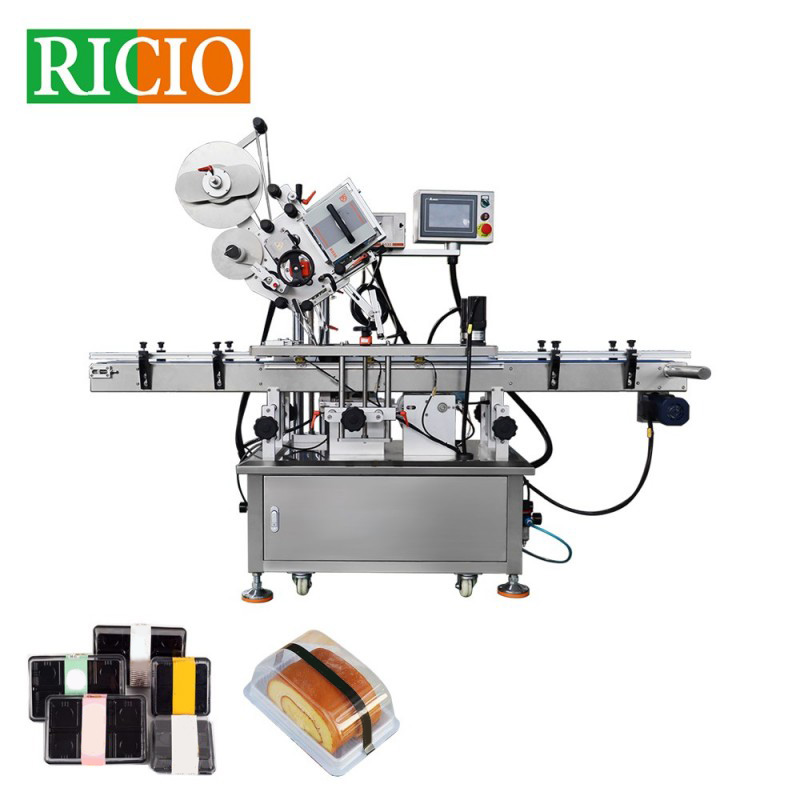
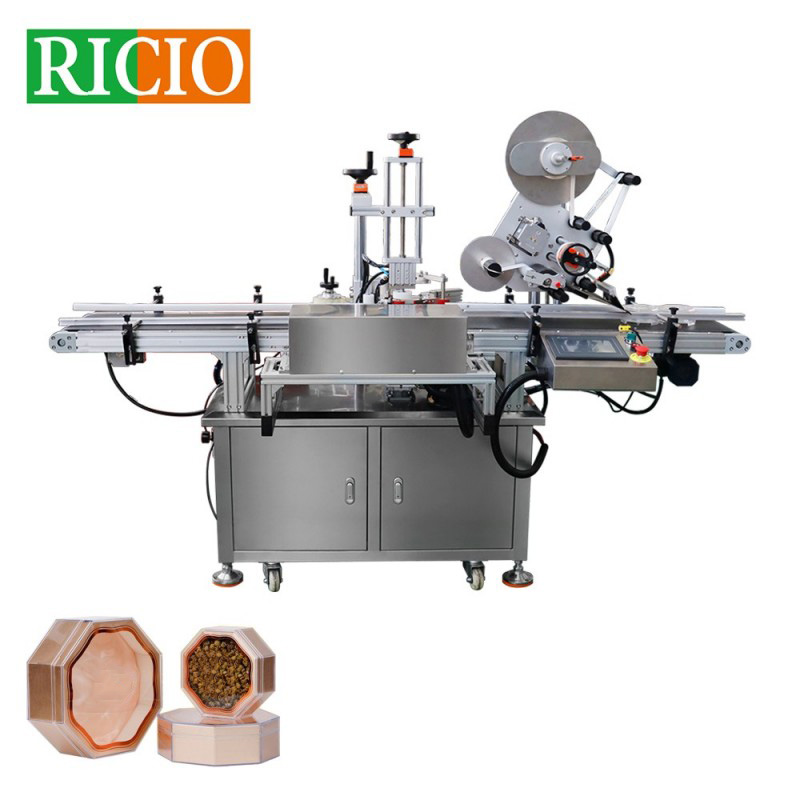
Flow pack labeling machine is designed to achieve the rationalization of production goals. Labeling process are automated, easy to operate, fast production speed, labeling position is uniform, beautiful, neat; the equipment is mainly suitable for food and beverage, grain and oil, pharmaceutical, daily chemical, chemical and other industries flat bottles, square bottles, single side or plane automatic labeling.
RICIO
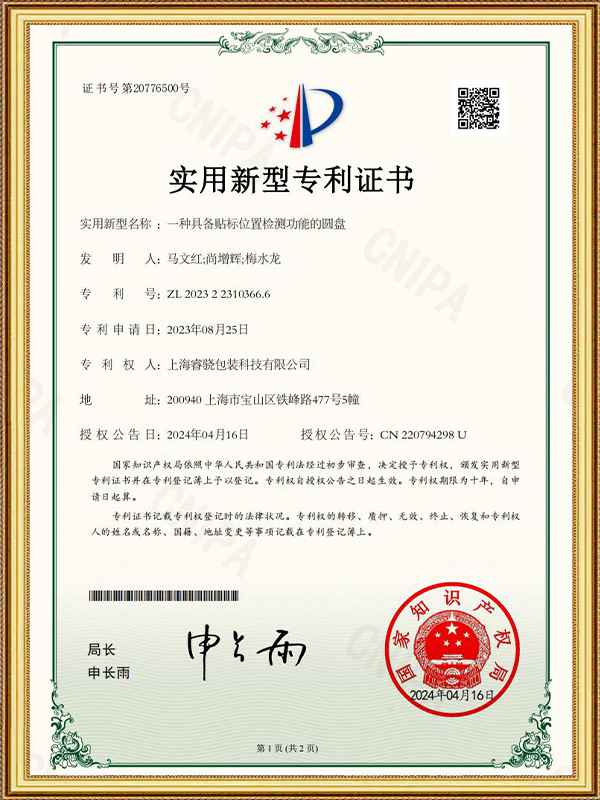
Shanghai Ruixiao Packaging Technology Co., Ltd.
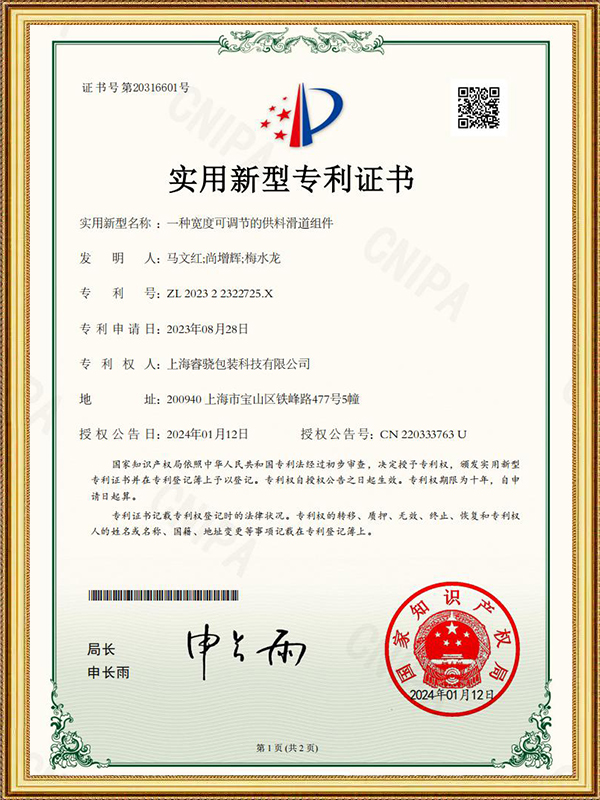
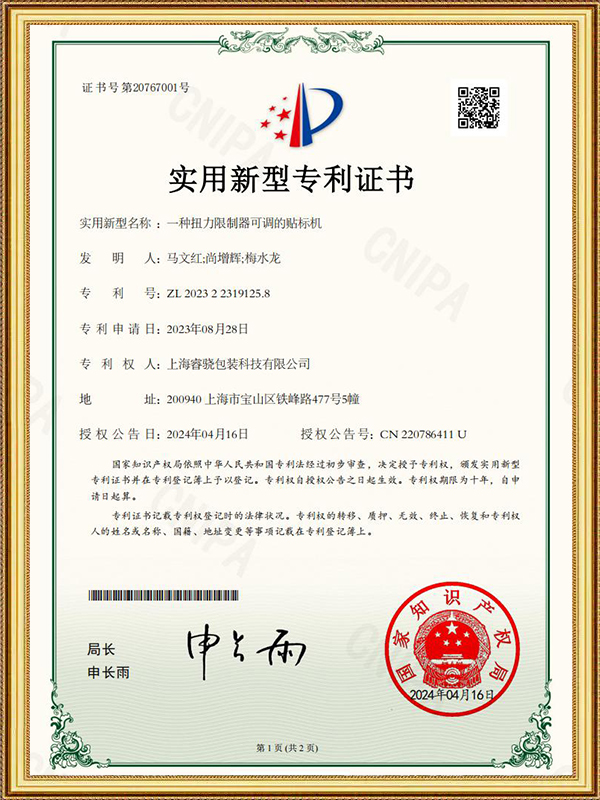
As China OEM Waist Sealing Labeling Machine Manufacturer and ODM Waist Sealing Labeling Machine Supplier, RICIO engages in the R&D and manufacturing of labeling machinery and is headquartered in Shanghai, China. RICIO's manufacturing foundation stems from the strategic acquisition of Shanghai Zhenbao Machinery Parts Factory, a well-established local machining enterprise. This integration has transformed us from a simple equipment assembler into a source manufacturer with in-house precision machining capabilities.
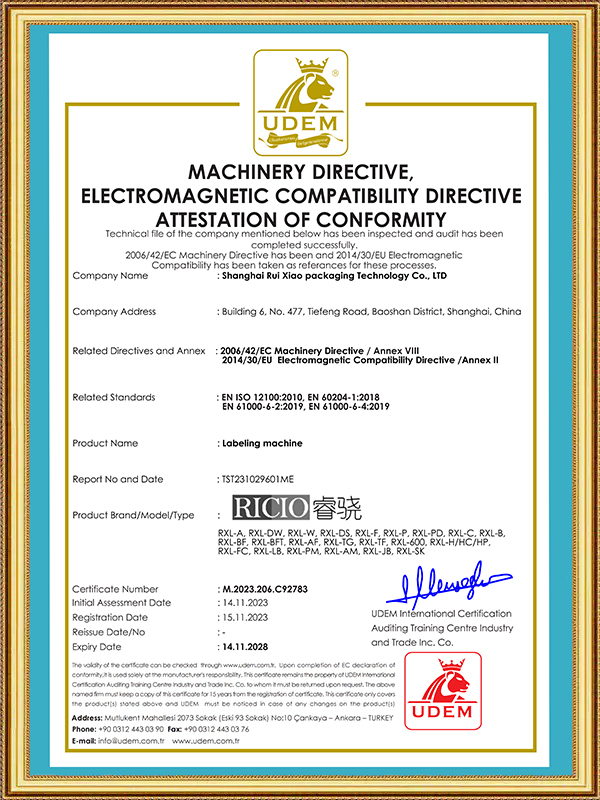
We are equipped with multiple CNC machining centers and an experienced technical team. From core component machining to complete machine assembly and commissioning, the entire process strictly adheres to the ISO 9001 international quality system, ensuring that every machine we deliver is built with a foundation of stable and reliable operation.
The direct conclusion: In-line print and apply labeling delivers the highest labeling accuracy and speed for variable-data packaging lines. When a packaging line must apply unique barcodes, lot numbers, expiration dates, or shipping labels without stopping, an in-line print-and-apply system is the ...
Why Coding on Bottle Labels Demands Precision Machinery
Coding directly onto bottle labels – not the bottle itself – has become the preferred method for beverage, pharmaceutical, and cosmetic manufacturers who need high-contrast, scannable date codes, lot numbers, and barcodes. Unlike direct‑to‑con...
What Is an Automatic Box Labeling Machine – And Why You Need One
An automatic box labeling machine is a piece of packaging equipment designed to apply pressure‑sensitive labels onto corrugated cartons, cardboard boxes, and similar containers without manual intervention. It eliminates the inconsiste...
A Waist Sealing Labeling Machine sits at the point where two separate labeling logics meet in one machine: wrap-around placement for surface identification, and waist-band sealing for structural closure of the label itself. In practical terms, this category of equipment is used wherever a label needs to fold neatly around a curved or squared waist section of a container — bottles, jars, tubs, capsule strips, or boxed products — while a sealing element locks the folded edge in place so the label survives handling, transport vibration, and shelf display. Because the sealing step happens in the same cycle as the labeling step, machine designers spend most of their engineering effort on three areas: catching problems before they become line stoppages, tuning the mechanism to a specific product geometry, and keeping the equipment running once it is on a customer's floor. The sections below look at each of these from a working-knowledge angle rather than a spec-sheet angle.
Diagnosing Faults Before They Disrupt the Line
At Shanghai RICIO Packaging Technology Co., Ltd, fault detection on a waist sealing labeling machine is treated as a production-management function rather than a mechanical afterthought. Instead of running until something visibly fails, the system continuously watches a set of checkpoints and stops the line the moment one of them falls out of range, triggering an alarm so an operator can respond before defective units accumulate. The categories monitored cover the failure points that actually cost manufacturers time on this type of equipment:
Label shortage — the supply roll running low or out before a scheduled changeover
Ribbon breakage — loss of print continuity mid-run
Missing labeling — a cycle completing without a label being applied
Counting overload — output exceeding the set batch or count parameters
Mechanical faults — deviations in the folding, feeding, or sealing motion itself
Stopping the machine as soon as a fault is identified — rather than flagging it for later review — is what keeps a small feed error from turning into a pallet of mislabeled product. The chart below illustrates how monitoring attention is typically distributed across these five checkpoint categories on this class of equipment.
Illustrative distribution of monitoring checkpoints across the five fault categories tracked by an automatic diagnostic system.
Engineering Precision Into Every Label Placement
No two waist-sealed products fold the same way. A capsule strip, a beverage bottle, and a rectangular carton each present a different waist profile, which means the folding arm, sealing pressure, and feed timing all need to be matched to the container rather than left at factory-default settings. This is where an engineering team's accumulated experience matters more than the machine's base specification. The team behind Shanghai RICIO Packaging Technology Co., Ltd's customization work has more than 30 years in the labeling industry, and holds labeling accuracy to ±0.5mm — whether the order is a standard model off the line or a fully worked-out OEM/ODM configuration built around a customer's product drawings.
Holding tolerance as line speed increases
The practical test of a customization program is whether accuracy holds up once the line speeds up. The chart below shows a typical deviation curve for a properly tuned waist sealing labeling machine as output speed rises — deviation increases only slightly and stays inside the ±0.5mm tolerance line throughout.
Typical labeling deviation across line speed increments, remaining within the ±0.5mm tolerance band.
In practice, customization requests break down roughly into three groups depending on how far a project departs from the base model:
Illustrative split of customization request types typically handled by an engineering team offering both standard and OEM/ODM solutions.
What Reliable After-Sales Support Looks Like in Practice
A waist sealing labeling machine is only as good as the support behind it once it is installed and running a production shift. Response speed to a technical query, the availability of on-site help for installation and commissioning, and whether wear parts are kept in stock all shape how much downtime a manufacturer actually experiences over the machine's working life. A comprehensive after-sales structure typically covers the following commitments, comparing favorably against a bare-minimum support package:
Comprehensive after-sales program (green) compared against a bare-minimum support package (orange), across five typical service dimensions.
Standard after-sales commitments offered on a waist sealing labeling machine installation.
Service Item
Commitment
Technical inquiry response
Within 24 hours
Installation & commissioning
On-site by engineers
Full machine warranty
1 year
Wear parts
Included with equipment
This is the level of coverage Shanghai RICIO Packaging Technology Co., Ltd builds into its standard after-sales terms, on the reasoning that a machine sitting idle on a production floor costs more than the parts needed to fix it.
Building Regional Partnerships Around Labeling Technology
Shanghai RICIO Packaging Technology Co., Ltd invites partners from all regions to join in the growth of intelligent packaging manufacturing. For distributors evaluating a labeling equipment line to represent, the terms of the partnership matter as much as the machine itself:
Exclusive distribution rights in authorized regions or industries, protecting market development interests
An exclusive distributor pricing system designed to preserve reasonable profit margins
Systematic training covering product knowledge, application solutions, and installation and commissioning
For manufacturers researching a Waist Sealing Labeling Machine to bring into their own product line or distribution portfolio, this kind of structured support — training included — tends to matter more over time than any single spec on the data sheet.
Frequently Asked Questions
What happens when the machine detects a fault mid-run?
The line stops and an alarm is triggered as soon as the fault is identified, whether it is a label shortage, a ribbon break, a missed label, a counting overload, or a mechanical deviation, so the issue can be corrected before more units are affected.
Can the machine be adapted to a non-standard container shape?
Yes — customization ranges from minor adjustments on a standard model to full OEM/ODM development, with labeling accuracy held to ±0.5mm regardless of which route is taken.
What support is available after installation?
Technical inquiries are answered within 24 hours, on-site installation and commissioning is available, and a 1-year full machine warranty applies with wear parts supplied alongside the equipment.
How does the distributor partnership work?
Partners receive exclusive distribution rights in their authorized region or industry, a dedicated distributor pricing system, and systematic training on the product line and its installation.

 English
 русский
 Español
 عربى



 +86 13681850339
 sales@raxpack.com
 Building 6, No. 477 Tiefeng Road, Baoshan District, Shanghai, China
