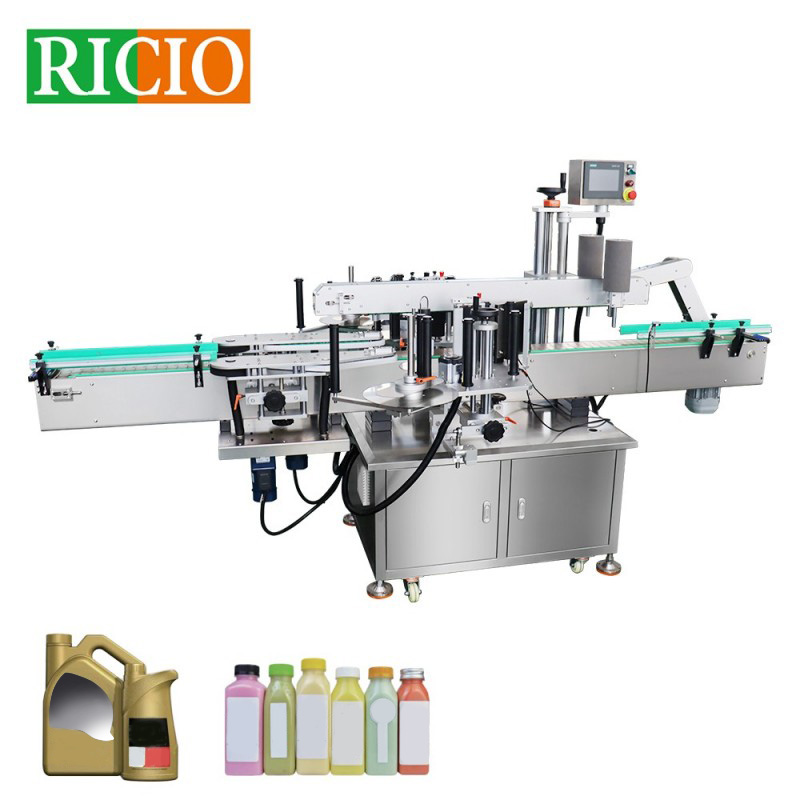
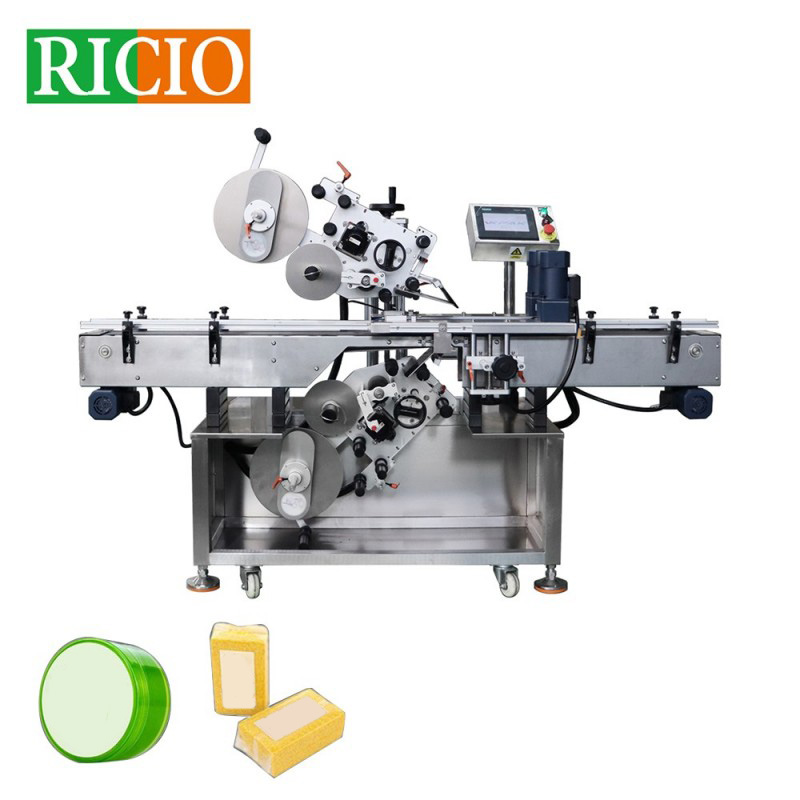
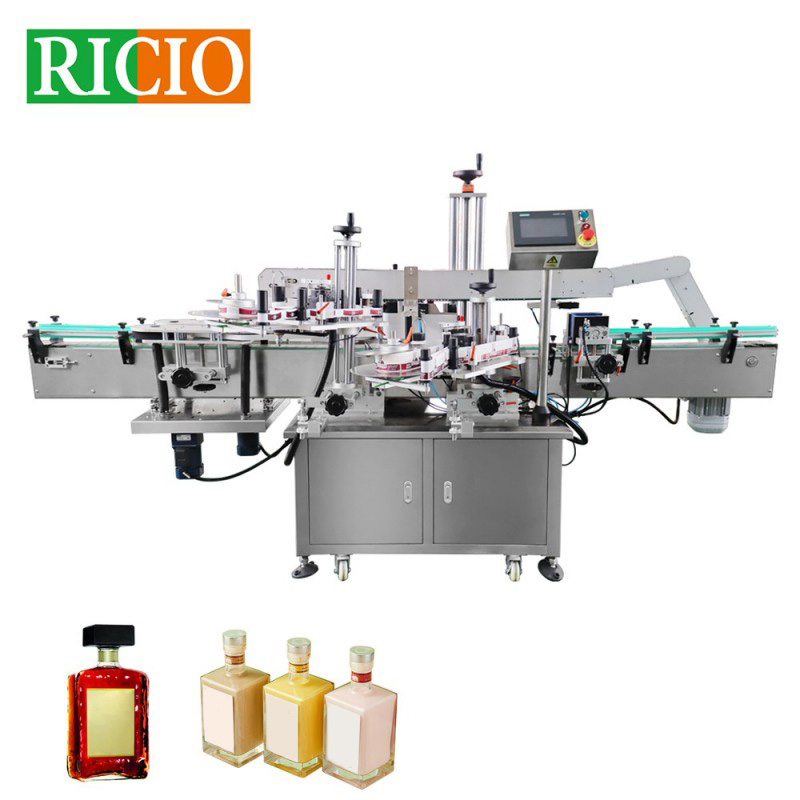
Double Side Labeling Machine is way suitable for daily chemicals, pharmaceuticals, food & beverage and other light industries in the package of flat, round, square different sizes & shapes bottles, such as: single-sided or double-sided even multiple-sided labeling products, which can be equipped with the character grain ribbon/coding/spraying printer as selectively optional accessories, labeling at the same time to achieve the printing of production batch number, date of production, 2D QR code and other information. Realizing the integration of labeling and printing work simultaneously, reducing the packaging process, improving production efficiency. Applicable self-adhesive labeling machine, self-adhesive film, electronic regulatory code, barcode, 2D QR code labels, transparent labels. High stability of machine performance, excellent labeling effect, no bubbles plus no wrinkles, high labeling precision/accuracy effect.
RICIO
Shanghai Ruixiao Packaging Technology Co., Ltd.
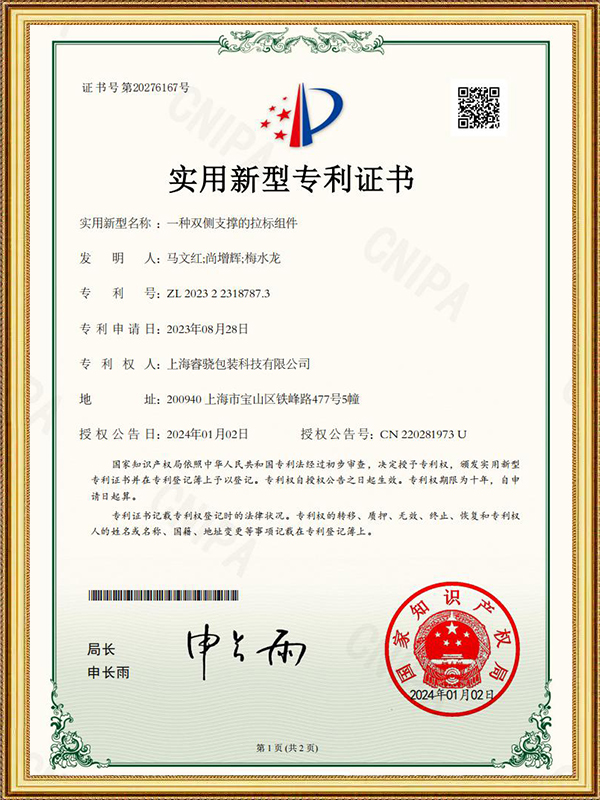
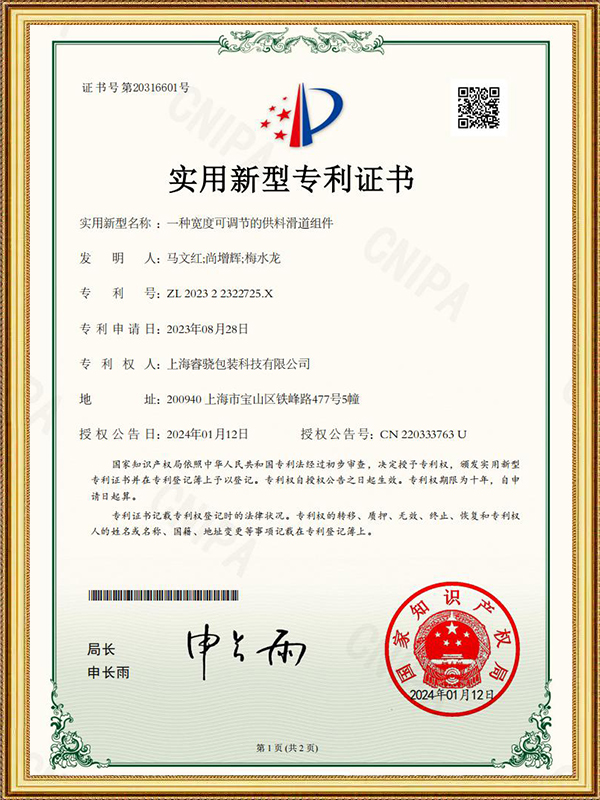
As China OEM Double Side Sticker Labeling Machine Manufacturer and ODM Double Side Labeling Machine Supplier, RICIO engages in the R&D and manufacturing of labeling machinery and is headquartered in Shanghai, China. RICIO's manufacturing foundation stems from the strategic acquisition of Shanghai Zhenbao Machinery Parts Factory, a well-established local machining enterprise. This integration has transformed us from a simple equipment assembler into a source manufacturer with in-house precision machining capabilities.
We are equipped with multiple CNC machining centers and an experienced technical team. From core component machining to complete machine assembly and commissioning, the entire process strictly adheres to the ISO 9001 international quality system, ensuring that every machine we deliver is built with a foundation of stable and reliable operation.
The direct conclusion: In-line print and apply labeling delivers the highest labeling accuracy and speed for variable-data packaging lines. When a packaging line must apply unique barcodes, lot numbers, expiration dates, or shipping labels without stopping, an in-line print-and-apply system is the ...
Why Coding on Bottle Labels Demands Precision Machinery
Coding directly onto bottle labels – not the bottle itself – has become the preferred method for beverage, pharmaceutical, and cosmetic manufacturers who need high-contrast, scannable date codes, lot numbers, and barcodes. Unlike direct‑to‑con...
What Is an Automatic Box Labeling Machine – And Why You Need One
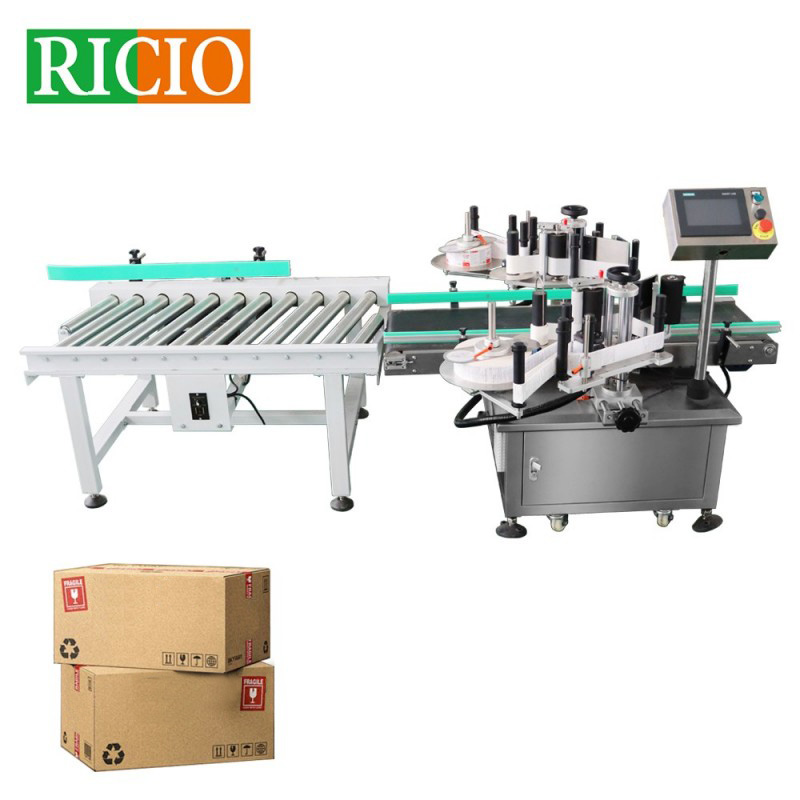
An automatic box labeling machine is a piece of packaging equipment designed to apply pressure‑sensitive labels onto corrugated cartons, cardboard boxes, and similar containers without manual intervention. It eliminates the inconsiste...
A double side labeling machine applies labels to two opposing faces of a product in a single pass, which is why manufacturers of bottles, tubes, cans, and flat-sided containers rely on it instead of running products through a labeler twice. Whether it's called a double side sticker labeling machine or a double side labeller, the core job is the same: keep front and back labels registered to each other, keep the line moving at production speed, and do both without drifting out of tolerance over an eight-hour shift. The knowledge below looks at what actually keeps that promise true on the shop floor — inspection routines, machining discipline, pre-shipment testing, and the support that follows a machine out the door.
Where Alignment Problems Actually Start
At Shanghai RICIO Packaging Technology, quality control personnel walk key workstations during production and assembly rather than waiting for a finished machine to test itself. The patrol focuses on four things that, left unchecked, are the usual reasons a double side labeling machine starts placing labels crooked months after installation: labeling head alignment accuracy, drive system tension, electrical wiring compliance, and pneumatic circuit airtightness.
Each of these interacts with the others. A drive belt that's slightly loose changes web tension, which changes how a label lands even if the head itself is perfectly aligned. A pneumatic leak that's too small to hear can still soften the pressure behind a label applicator pad, leaving one side of a run applied firmly and the other side applied late.
Machining Discipline Behind the Moving Parts
Alignment inspections only mean something if the parts being aligned were made to the same tolerance every time. Component machining at RICIO is carried out strictly in accordance with the ISO 9001 international quality system for process control, which is less about a document on a wall and more about a repeatable sequence — the same fixturing, the same checkpoints, the same sign-off before a part moves to the next station.
For a double side sticker labeling machine, this matters most on the parts that carry motion: cam followers, drive shafts, and the mounting plates that hold each labeling head square to the product line. A part machined slightly out of spec doesn't usually fail outright — it just quietly costs accuracy, showing up later as a label that's a millimeter off on one side of the bottle but not the other.
Fixturing kept consistent across production runs, not adjusted machine to machine
Checkpoints built into the process rather than added only at final inspection
Sign-off required before a machined part advances to assembly
What a Complete Machine Test Actually Checks
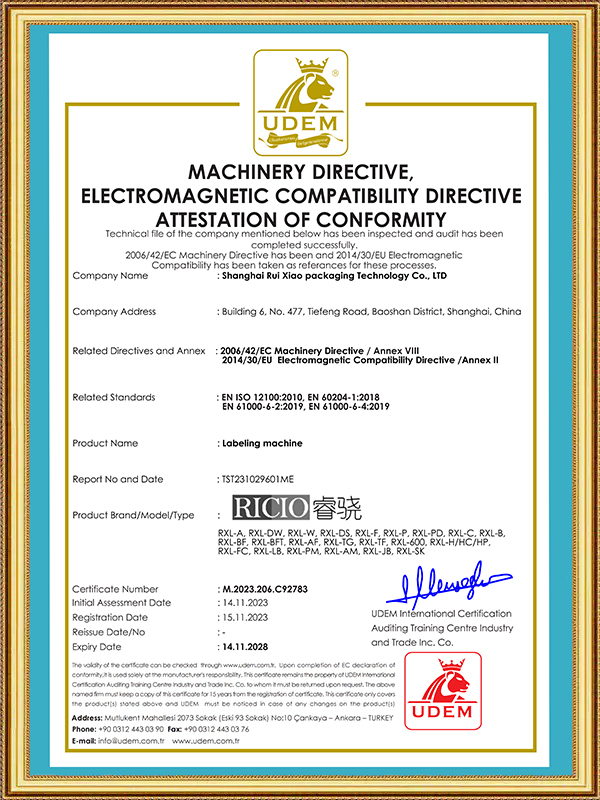
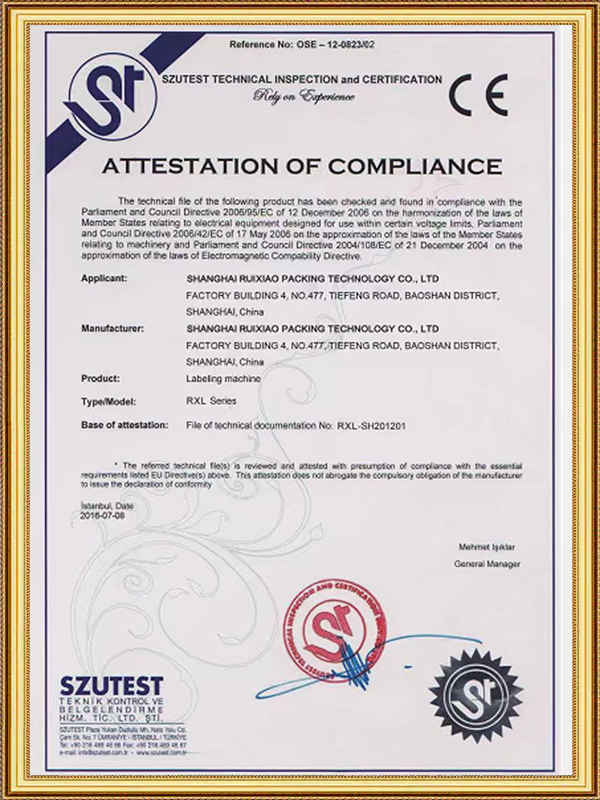
Before a double side sticker labeling machine ships, it's run as a complete unit rather than tested part by part. Each machine is fully tested to CE European standards, with checks covering no-load stability, labeling accuracy, speed, and safety response. A certificate of conformity is issued only when every one of those parameters meets the quality benchmark — not as a formality, but as the gate a machine has to pass through before it's cleared to leave the floor.
Test Category
What It Confirms
No-load stability
The machine runs without vibration or drift before a single product is on the line
Labeling accuracy
Front and back labels land within tolerance across a full run
Speed
Rated throughput is reached without accuracy falling off
Safety response
Guards and interlocks respond as intended before power-up on-site
Pre-shipment checks performed on every complete machine before a certificate of conformity is issued.
Component machining and final machine delivery are both handled under the same discipline — CE European standards on the finished machine, ISO 9001 process control on the parts underneath it — which is why the two stages described above aren't separate departments so much as one continuous chain of accountability, a chain RICIO applies to its own parts processing across the board.
Support Doesn't End at Shipment
A machine that tests perfectly in the factory still has to be commissioned, adjusted, and occasionally serviced once it's running on someone else's production line, often in a different country and time zone. RICIO has built a professional after-sales service team of over 30 members dedicated to handling technical support for both overseas and domestic customers, with the goal of a rapid response whenever a customer needs one.
For a double side labeller, the questions that come up after installation are usually practical rather than mechanical — how to recalibrate after a bottle size change, why one label sensor needs cleaning more often than the other, how to adjust tension after a roll change. Having a team sized to actually answer those questions, rather than route them through a queue, is part of what keeps a machine performing the way it tested on day one.
Common Questions
What's the difference between a single-side and a double-side labeling machine?
A single-side machine applies one label per product pass. A double side labeling machine applies labels to two faces — typically front and back — in the same pass, keeping both registered to the same reference point so they line up with each other rather than being applied independently.
Why does drive system tension affect label placement?
If tension drifts, the web or the product carrier moves slightly faster or slower than the labeling head expects, which shifts where the label lands even when the head itself hasn't moved. This is why tension is checked as part of the same patrol inspection as alignment, not on its own schedule.
Is a fully tested machine still likely to need adjustment after installation?
Some fine adjustment is normal — container batches, label stock, and ambient conditions vary by site. Complete machine testing before shipment confirms the machine performs correctly on its own; on-site commissioning fine-tunes it for the specific product it will run.
What should happen if labeling accuracy drifts after months of operation?
The same checkpoints used before shipment — alignment, tension, wiring, and pneumatic airtightness — are the right place to start troubleshooting, since accuracy problems almost always trace back to one of those four areas rather than the labeling head itself.

 English
 русский
 Español
 عربى




 +86 13681850339
 sales@raxpack.com
 Building 6, No. 477 Tiefeng Road, Baoshan District, Shanghai, China
