 English
 русский
 Español
 عربى



Automatic Label Dispenser Buying Guide: Speed, Accuracy, and Real Cost
2026-11-09
Content
- 1 What an Automatic Label Dispenser Actually Does
- 2 Dispenser, Semi-Automatic, or Full Automatic: Where the Crossover Sits
- 3 Four Numbers That Set the Specification
- 4 Matching the Dispenser Head to the Container
- 5 Precision Work: Syringes, Vials, and Cosmetic Tubes
- 6 Print-and-Apply Dispensing for Cartons and Traceability
- 7 What an Automatic Label Dispenser Costs to Own
- 8 Commissioning, Changeover, and Daily Care
- 9 Frequently Asked Questions About Automatic Label Dispensers
- 9.1 What is the difference between an automatic label dispenser and an automatic labeling machine?
- 9.2 How fast can an automatic label dispenser run?
- 9.3 Can a dispenser handle transparent labels?
- 9.4 What label reel sizes are standard?
- 9.5 Do I need compressed air for labeling?
- 9.6 How accurate is automatic label placement?
- 9.7 What causes labels to misalign at the peel plate?
- 9.8 Can one machine handle several container sizes?
- 9.9 Where should a dispenser be placed on an existing line?
On a filling line that turns out 6,000 bottles per shift, hand-peeling labels is usually the slowest operation in the room. That single bottleneck is why the question about automatic label dispensers comes up in nearly every packaging upgrade conversation, and the honest answer is not the same for a 300-piece pilot run and a 24-hour pharmaceutical line.
Here is the short version. If your batches stay under roughly 5,000 units, if one operator applies more than about 25 labels per minute, or if placement tolerance is looser than plus or minus 1.5 mm, a benchtop automatic label dispenser is normally the right purchase. Above those numbers, and especially when a label has to land within plus or minus 0.5 mm or carry variable printed data, the budget belongs in an inline labeling machine with a proper dispensing head rather than in a faster desk unit.
The rest of this guide explains where that crossover line actually sits, which mechanical details move placement accuracy, what the machine costs to run after installation, and how to tell a peel plate problem from a sensor problem before you call a service engineer.
What an Automatic Label Dispenser Actually Does
The phrase covers two different machines, and confusing them is the most common reason buyers end up disappointed with a purchase.
- A peel-and-present dispenser feeds the web off the reel with a motorized roller, a sensor detects the gap between labels, and the liner is peeled back so one label sits ready on a small plate. A person or a pick-and-place arm lifts it and applies it by hand. Realistic output is 15 to 45 labels per minute per operator, and the machine makes no promise about where the label lands.
- A dispensing head inside an automatic labeling machine uses the same peel geometry, but the web is driven by a stepper or servo motor synchronized to a conveyor, and the label is transferred by a wipe-down roller, brush, tamp pad, or air jet. Output runs from about 30 pieces per minute on a compact tabletop model to more than 300 pieces per minute on a star-wheel rotary system.
The mechanical core is nearly identical in both cases: unwind spindle, tension control, peel plate, drive roller, and liner take-up. What changes is who applies the label and how the timing is governed. A dispenser removes the peeling motion from the operator. An automatic labeling machine removes the operator from the placement step entirely.
That difference shows up on the shop floor within a single shift. On hand-applied lines, placement on a 30 mm bottle typically drifts by 2 to 4 mm between the first hour and the last as operators fatigue. A synchronized applicator holds the same container within plus or minus 0.5 to 1 mm from the first carton to the last, which matters when a scanner has to read a barcode that sits 4 mm from the bottle edge.
Dispenser, Semi-Automatic, or Full Automatic: Where the Crossover Sits
Most buyers compare machines on top speed and stop there. Speed is the least interesting number, because a dispenser that runs fast but needs a 25-minute changeover will lose to a slower machine on any line that switches SKUs twice a day. The table below compares the four common configurations on the numbers that decide daily output.
| Configuration | Output Band | Placement Accuracy | Typical Changeover | Best Fit |
|---|---|---|---|---|
| Peel-and-present dispenser, hand applied | 15 to 45 labels per minute per person | 1.5 to 3 mm | Under 5 minutes | Runs under 5,000 units, odd shapes, rework stations |
| Semi-automatic dispenser with fixture | 30 to 60 pieces per minute | 1 to 2 mm | 10 to 20 minutes | Batches of 5,000 to 20,000 pieces |
| Inline automatic labeling machine | 60 to 200 pieces per minute | 0.5 to 1 mm | 10 to 30 minutes, recipe based | Single SKUs above 20,000 pieces |
| Rotary star-wheel labeling system | 150 to 400 pieces per minute | 0.3 to 0.5 mm | 20 to 45 minutes | High-volume pharma, beverage, and personal care |
Read the table from right to left rather than left to right. Start with your batch size and changeover reality, then check whether the accuracy column meets the print specification, and only then look at the speed column. Buying a high-speed head for a line that spends a third of its day switching formats is how packaging budgets get wasted.
Four Numbers That Set the Specification
When you talk to a supplier, four figures do most of the work in sizing an automatic label dispenser correctly. Bring these to the conversation and the quotation becomes comparable across vendors instead of a list of slogans.
- Web speed, not unit speed. A line moving 120 containers per minute with an 80 mm label consumes 9.6 meters of web per minute, about 160 mm per second. Sizing the drive at 120 to 130 percent of that figure leaves the loop stable; sizing it at exactly 100 percent produces the small hesitation at each trigger that shows up later as a crooked label.
- Reel geometry. Standard cores measure 76.2 mm (3 inches), although 40 mm cores still appear on small desktop units. A 300 mm outer diameter reel with 0.08 mm liner carries roughly 2,000 to 3,000 labels of 60 by 40 mm. Larger reels cut operator stops; they also demand more precise tension control at the unwind.
- Container stability. A 10 mL vial standing 45 mm tall on a 22 mm base is far harder to hold than a 1 L round bottle. Anything below about 40 mm in diameter usually needs a pocket, a star wheel, or horizontal orientation where the container lies on its side during application.
- Changeover frequency. More than two SKU switches per day and recipe memory plus a single-point peel adjustment will save more production time than a higher top speed ever will.
A fifth factor sits quietly in the background: label construction. A 60 micron PET label on a glassine liner behaves very differently from a thin film label on a 0.05 mm liner, and the peel plate angle that suits one will throw wrinkles on the other.
Matching the Dispenser Head to the Container
The applicator, not the dispenser motor, decides whether the label lands where the artwork says it should. The transfer method changes with the container surface and the position of the label on that surface.
- Round bottles and vials rotate against a wipe-down roller or belt, wrapping the label around the circumference. Rotation speed and roller pressure set the seam overlap, usually 3 to 5 mm.
- Flat surfaces, boxes, and pouches use a tamp pad or an air-blow head. Tamp handles recessed or textured surfaces; air-blow is faster on flat cartons and shipping cases.
- Tubes and ampoules are fed horizontally so the container cannot roll, letting the label run along the tube axis.
- Pails, drums, and conical buckets have tapered walls, so the effective circumference changes with the wrap height and the dispenser pitch has to be set per diameter.
Round containers remain the largest single category on most packaging floors. A dedicated round bottle labeling configuration handles rotation, wrap, and seam control as one integrated module instead of three separate adjustments that have to be re-tuned every shift.
 Automatic Round Bottle Tabletop Labeling MachineThe automatic round bottle tabletop labeling machine is designed for efficient and accurate labeling of round bottles, jars, cans, and other cylindrical containers. Wi...View Product →
For pilot batches and low-volume filling benches, a tabletop automatic label dispenser with a positioning fixture covers the runs that a full conveyor line cannot justify economically, and it can be moved between filling rooms when production planning changes. The trade-off is manual loading, which caps practical output at a few thousand pieces per day.
Precision Work: Syringes, Vials, and Cosmetic Tubes
Syringe barrels are the hardest common container in labeling. Diameters run from 8 mm to 25 mm, the barrel cannot be rotated once the plunger is seated, and the label often has to align with molded graduations, which means axial placement within 0.3 to 0.5 mm along the barrel. A generic dispenser with a rubber roller will not hold that tolerance for a full shift.
The workable approach is horizontal feeding: the barrel rests in a cradle, a servo-driven web advances, and a wrap belt applies the label without spinning the part. Clearance-type and continuous-type feeders differ mainly in how parts enter the nest, and the right choice depends on whether your syringes arrive in trays or in bulk.
 Automatic Horizontal Syringe Labeling MachineThe automatic horizontal syringe labeling machine is designed for automatic labeling of syringes, needle tubes, and small-diameter cylindrical products. With a horizon...View Product →
The same precision logic applies to small cosmetic items. Lipstick tubes, mascara barrels, and 5 mL vials have curved or tapered surfaces where a 0.1 mm deviation in peel plate position is visible on the finished product. Peel plate edge quality matters more than most buyers expect: a burr of 0.05 mm is enough to catch the liner, stall the web, and produce a label with a folded corner.
That is one reason to look at how the machine is actually built. When brackets, peel plates, and guide rails are machined in-house on CNC centers instead of sourced from general fabricators, the tolerance stack-up across the label path stays tight and repeatable from unit to unit. RICIO, for example, machines its own label path components and assembles machines under an ISO 9001 quality system, which is what keeps the tenth machine behaving like the first one.
Print-and-Apply Dispensing for Cartons and Traceability
On logistics and shipping lines, the dispenser has to print and apply in one motion because every label carries different data: an SSCC, a GS1-128 barcode, a batch code, or a serial number. A print-and-apply head pairs a thermal print engine running at 203 to 600 dpi with a tamp or air-blow applicator, so the label is generated and placed within one cycle.
Typical throughput for carton work sits between 50 and 90 packs per minute with a 100 by 150 mm shipping label; the applicator arm travel distance usually sets the real limit rather than the print speed. Two details separate a reliable installation from a problematic one:
- Print resolution has to match the scanner, not the eye. A 12 mm high barcode printed at 203 dpi reads reliably at the standard verification grade on corrugated board; finer print on a rough surface can reduce contrast and hurt the grade.
- Reject handling must be defined before installation. Any label that fails verification should be voided, reprinted, and diverted without stopping the line, otherwise operators start overriding the check to keep throughput up.
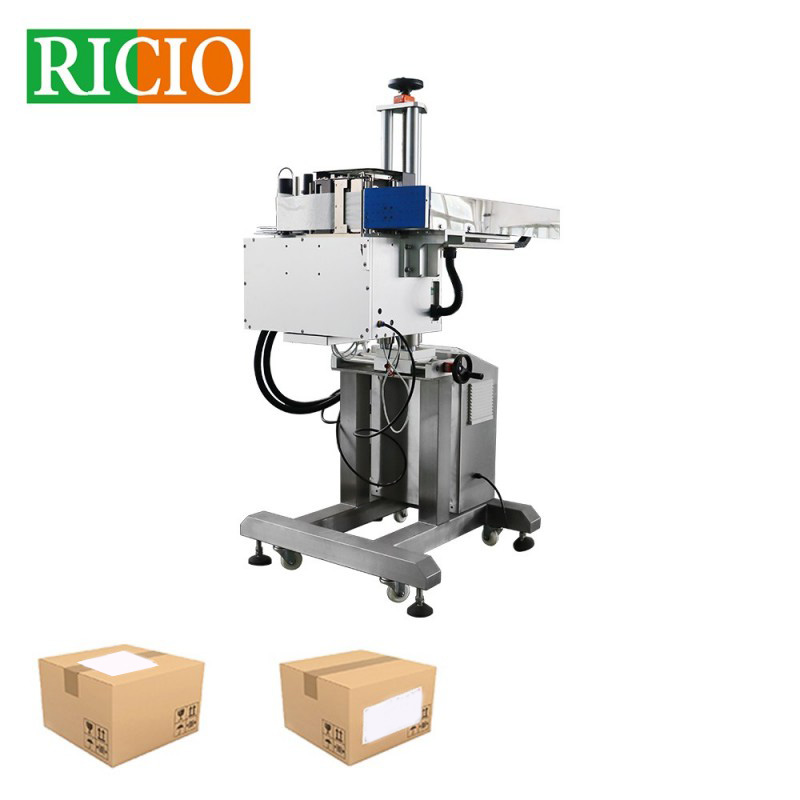 Print and Apply Label ApplicatorsThe print and apply label applicators is an integrated automatic system designed for real-time label printing and accurate label application.View Product →
The same principle covers top, side, and corner placement on cartons. A top-and-side shipping label applicator applies two panels in one pass, which removes a manual handling step and cuts the chance of a label being applied to the wrong face.
What an Automatic Label Dispenser Costs to Own
Purchase price is the easy part of the calculation and rarely the deciding one. The following example uses illustrative figures only, with a fully loaded labor rate of about 8 USD per operator hour, so adjust them to your own market.
A plant hand-applying labels to 5,000 bottles per shift, with each operator managing 28 labels per minute, spends roughly 180 minutes of pure labeling time per shift before handling and inspection are counted. An inline machine running 100 bottles per minute completes the same 5,000 bottles in about 50 minutes with one operator monitoring the line. Saving roughly 2.5 operator hours per shift across two shifts and 250 working days adds up to about 1,250 operator hours per year, which at the illustrative rate is close to 10,000 USD in recovered capacity.
Running costs sit in four places, and it is worth asking about each one during quotation:
- Label waste at startup, typically 3 to 8 labels per changeover while the sensor and peel point settle.
- Compressed air at 6 bar and 30 to 60 liters per minute if the applicator uses air-blow rather than contact transfer.
- Electrical draw between 0.5 and 2 kW depending on servo drives, conveyor motors, and any print engine.
- Wear parts: drive rollers, peel plates, wrap belts, and sensors, which are consumable rather than permanent.
If you want the full version of this arithmetic, including how to frame payback for different batch sizes, this guide to label application machine types, selection, and ROI walks through the same calculation step by step.
Commissioning, Changeover, and Daily Care
Most early failures on a new dispenser are setup issues, not part failures. A five-minute routine at the start of each shift prevents the majority of them.
- Check the peel plate edge position against the drive roller. A gap that is 0.3 mm too wide lets the liner slip and the label release late.
- Wipe the sensor lens and re-teach the label gap if the web has been changed to a different liner thickness.
- Verify unwind tension by hand before the first production piece, not after the first misfeed.
- Confirm the liner take-up spindle is holding tension, because slack liner is the most common cause of a wrap-around jam.
- Run two scrap containers at every changeover and measure placement with a steel rule rather than by eye.
Keep a log of which SKU needed which pressure setting. After three months that log becomes the fastest setup aid in the plant, and it makes the changeover time predictable enough to schedule around.
Frequently Asked Questions About Automatic Label Dispensers
What is the difference between an automatic label dispenser and an automatic labeling machine?
A dispenser peels a label from its liner and presents it for hand pickup, while an automatic labeling machine peels, transfers, and applies the label with no manual contact. Dispensers suit low volumes and irregular parts; labeling machines suit repeatable containers and higher output.
How fast can an automatic label dispenser run?
Bench dispensers present 15 to 45 labels per minute, limited by the operator rather than the motor. Inline labeling machines with a synchronized dispensing head run from about 30 to 200 pieces per minute, and rotary systems reach 300 to 400 pieces per minute.
Can a dispenser handle transparent labels?
Yes, with the right sensor. Transparent labels on a clear liner need an ultrasonic or capacitive label sensor instead of a standard optical gap sensor, because the optical beam passes straight through the web without detecting the gap.
What label reel sizes are standard?
The common core is 76.2 mm, or 3 inches, with outer diameters between 200 mm and 400 mm. Some desktop units still accept 40 mm cores, and a 300 mm reel with 0.08 mm liner typically carries 2,000 to 3,000 labels of 60 by 40 mm.
Do I need compressed air for labeling?
Only if the applicator uses air-blow or pneumatic tamp. Contact transfer with a wipe-down roller or wrap belt needs no air at all, which simplifies installation in rooms where a compressor is not available.
How accurate is automatic label placement?
Inline machines with servo web drives hold plus or minus 0.5 to 1 mm on stable containers, and rotary systems reach plus or minus 0.3 to 0.5 mm. Hand-applied labels typically vary by 1.5 to 3 mm even with an experienced operator.
What causes labels to misalign at the peel plate?
The four usual causes are excessive unwind tension, a peel plate edge that is worn or burred, a drive roller with a glazed surface, and a conveyor speed that outruns the web drive. Checking these in that order resolves most misfeed complaints without parts replacement.
Can one machine handle several container sizes?
Yes, if changeover is designed in. Recipe memory, quick-release guide rails, and a single-point peel adjustment let one machine cover a family of bottle diameters, usually within 10 to 30 minutes per format.
Where should a dispenser be placed on an existing line?
Place it downstream of filling and capping but before case packing, where containers are upright, stable, and at a controlled pitch. Installing before capping invites vibration that shows up as inconsistent placement.
The decision between a dispenser and a full labeling machine comes down to three measurable things: how many labels per minute leave your line, how tightly the artwork has to land, and how often the format changes. Get those numbers in writing before you request a quotation, and the machine specification writes itself.
One practical step helps more than any brochure. Send your container sample, your actual label roll, and your target line speed to the machine builder. A supplier who tests a real roll of your labels on a real bottle will tell you the peel angle and pressure setting before delivery, and that single test prevents most of the first-week surprises that give automatic labeling equipment a worse reputation than it deserves.
related products
-
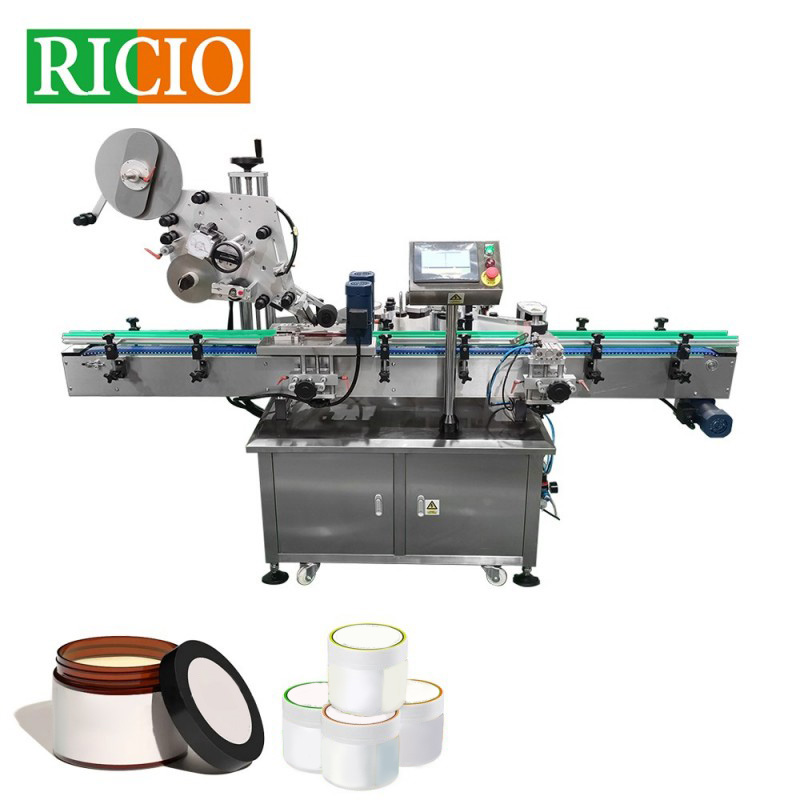
Automatic Round Bottle Side and Top Labeling Machine
-
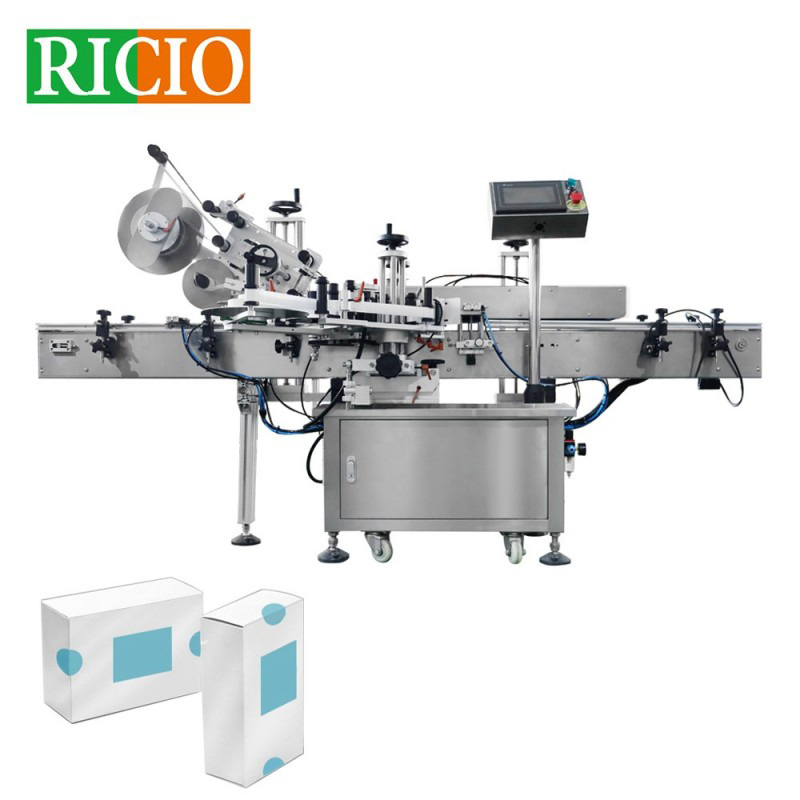
Automatic Top Side and Corner Label Applicator
-
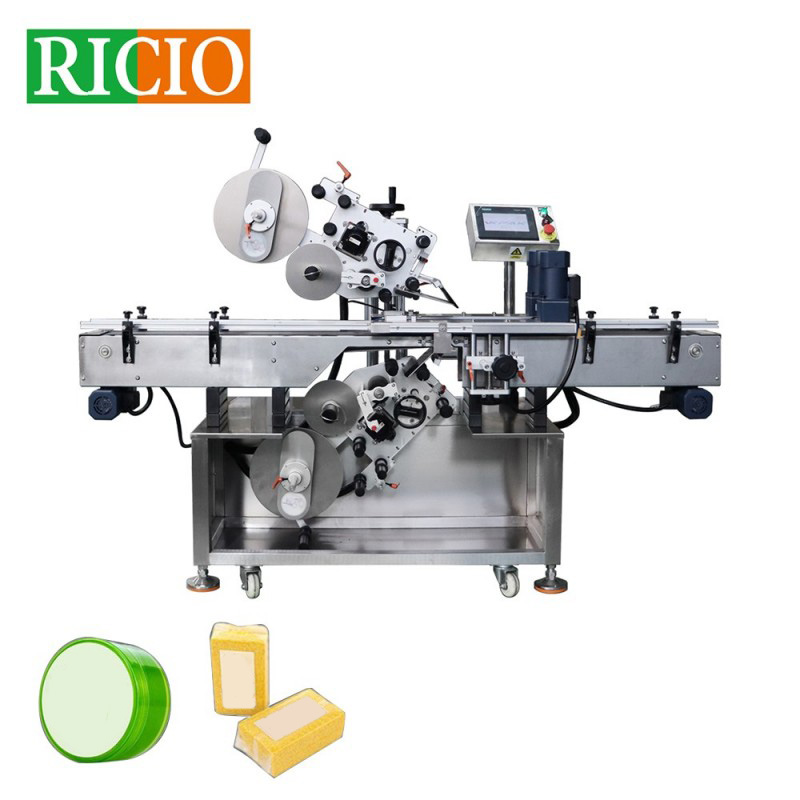
Automatic Top and Bottom Labeling Machine
-
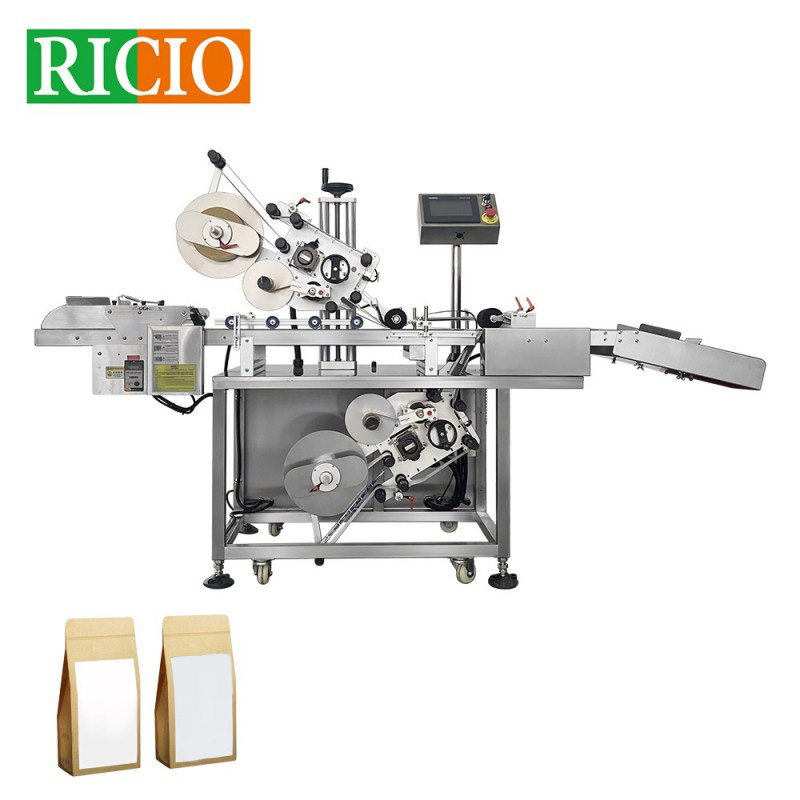
Automatic Paging Top and Bottom Pouch Labeling Machine
-
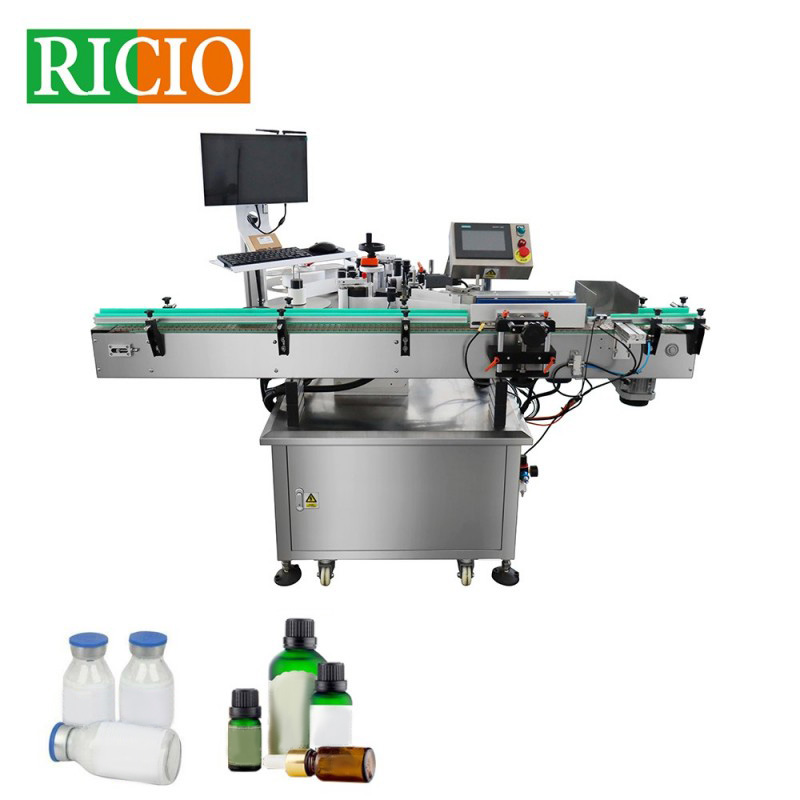
Automatic High Speed Vertical Round Bottle Labeling Machine
-
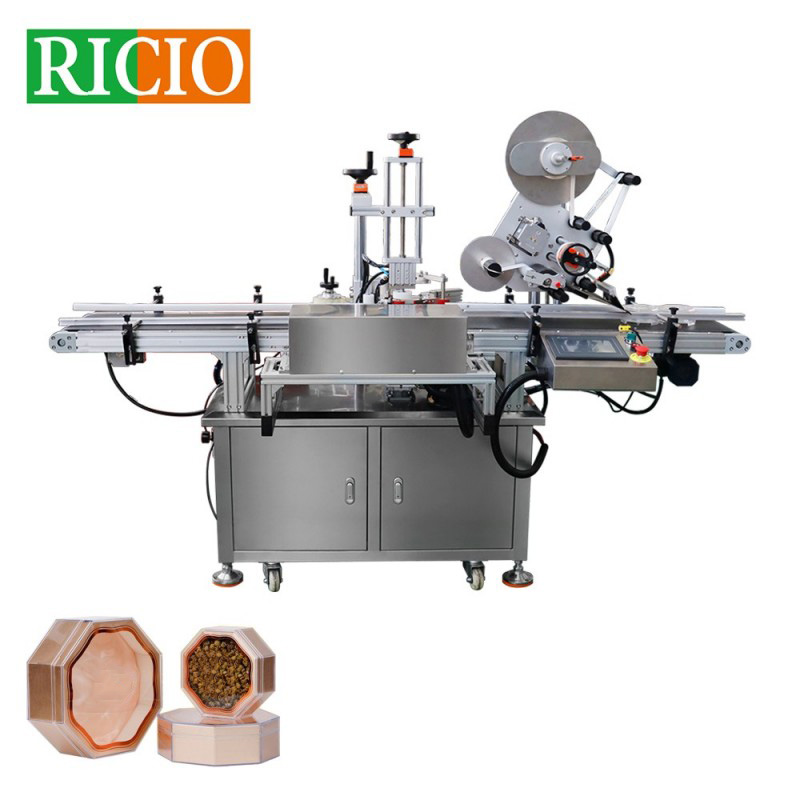
Automatic Tape Sealing and Labeling Machine
related News
 +86 13681850339
 sales@raxpack.com
 Building 6, No. 477 Tiefeng Road, Baoshan District, Shanghai, China
- Tabletop Labeling Machine
- Round Bottle Labeling Machine
- Automatic Tube Labeling Machine
- Pouch Labeling Machine
- Rotary Labeling Machine
- Syringe Labeling Machine
- Top Labeling Machine
- Single Side Sticker Labeling Machine
- Double Side Labeling Machine
- Bucket Labeling Machine
- Bottom Labeling Machine
- Corner Label Applicator
- Waist Sealing Labeling Machine
- Square Bottle Labeling Machine
