 English
 русский
 Español
 عربى
عربى


Complete Guide to Label Applicators: Types, Selection Tips & Industrial Solutions
2026-09-21
Content
Label applicators are the backbone of modern packaging lines. If your operation needs consistent, high-speed label placement without jams or misalignment, choosing the wrong machine can cost you thousands in downtime and waste. The first decision is knowing your container type and desired output speed—everything else follows. This guide cuts through the noise to help you match the right label applicator to your product, volume, and budget.
Types of Label Applicators Based on Application Method
Label applicators fall into three core mechanical categories, each suited to different label materials, product shapes, and line speeds. Understanding these fundamentals prevents costly specification errors.
- Tamp applicators – A pad picks up the label and presses it onto the product. Ideal for flat or slightly curved surfaces and fragile containers. Typical speeds range from 30 to 80 labels per minute (LPM).
- Blow-on applicators – Label is held on a grid and blown onto the product with a short burst of air. Great for delicate items or recessed areas. Speeds up to 120 LPM.
- Wipe-on applicators – Label is applied directly to the passing product using a brush or roller. Excellent for round bottles in continuous motion, achieving speeds above 200 LPM.
Modern machines often combine these principles. For example, a round bottle labeling machine may use a wipe-on module for the body while a top-side tamp applies a secondary label. Always verify the applicator type matches your label material (paper, film, clear) and container rigidity.
| Applicator Type | Typical Speed (LPM) | Best For |
|---|---|---|
| Tamp | 30–80 | Flat surfaces, fragile glass, odd shapes |
| Blow-on | 40–120 | Recessed panels, concave curves, soft pouches |
| Wipe-on | 80–250+ | Round bottles, continuous high‑speed lines |
How to Choose the Right Label Applicator for Your Production Line
The selection process narrows down to five quantifiable factors. We recommend rating each factor on a 1‑10 scale for your application and then comparing machines.
- Container shape & material – Round, square, flat, or irregular. Rigid glass or flexible plastic.
- Label placement accuracy – Tolerance in mm (e.g., ±1 mm for pharmaceuticals versus ±3 mm for logistics).
- Production throughput – Target labels per minute (LPM) and whether the line runs 8 or 24 hours.
- Label size & material – Wide or narrow, paper or film, die‑cut or butt‑cut.
- Integration complexity – Conveyor height, PLC compatibility, space constraints.
Once you have these specifications, you can map them to machine categories. For instance, a square bottle labeling machine demands a different applicator head than a round bottle, often requiring a dual‑side or wrap‑around module. Always request a dwell‑time simulation with your production label stock before purchasing.
To see how different models handle these factors, visit the square bottles labeling solutions page for detailed specifications.
Optimizing Labeling Accuracy and Throughput
Accuracy and speed are a trade‑off, but modern servo‑driven applicators narrow the gap. A ±0.5 mm placement accuracy is achievable on dedicated machines, while general‑purpose units hold ±2 mm. Throughput depends heavily on label‑feed timing and product spacing.
Consider the following benchmark data from production audits across 120 packaging lines (2025–2026):
| Industry | Typical Accuracy | Maximum Throughput |
|---|---|---|
| Pharmaceutical | ±0.5 mm | 180 LPM |
| Beverage | ±1.5 mm | 350 LPM |
| Cosmetics | ±0.8 mm | 120 LPM |
| Logistics | ±3 mm | 200 LPM |
To maintain high accuracy at speed, look for features like automatic label‑length sensing, anti‑static buffs, and servo‑controlled unwind spools. Machines that combine these can reduce waste by up to 15% compared to pneumatic‑only systems.
Industry‑Specific Labeling Solutions
Different sectors impose unique requirements on label applicators. Below we highlight three common applications and the machines that excel in them.
Round Bottles – Beverage, Pharmaceutical & Cosmetics
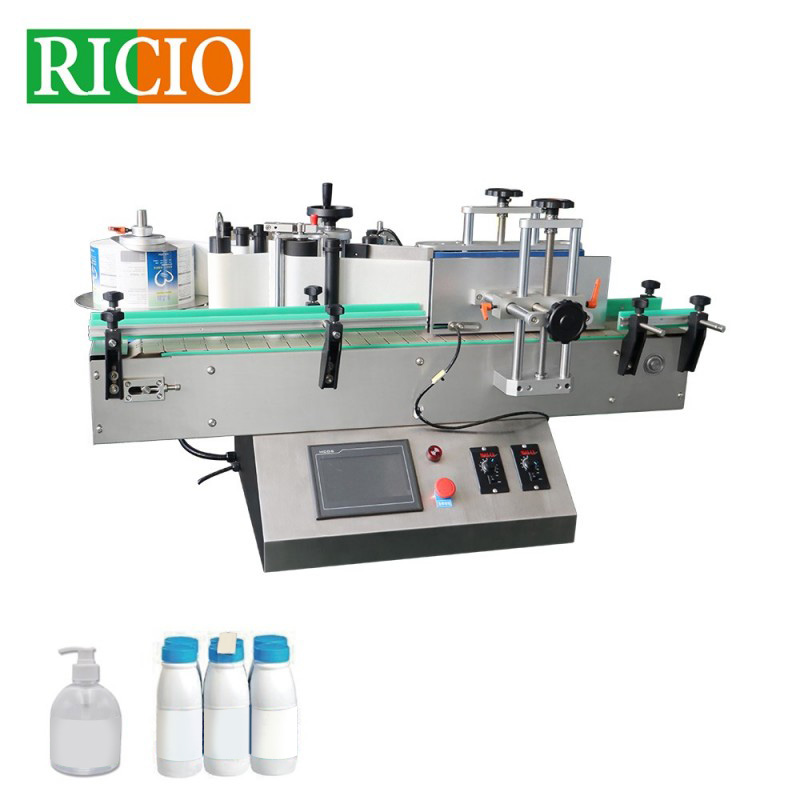
For high‑speed production of cylindrical containers, a wipe‑on or rotary applicator provides the best balance of speed and placement consistency. The 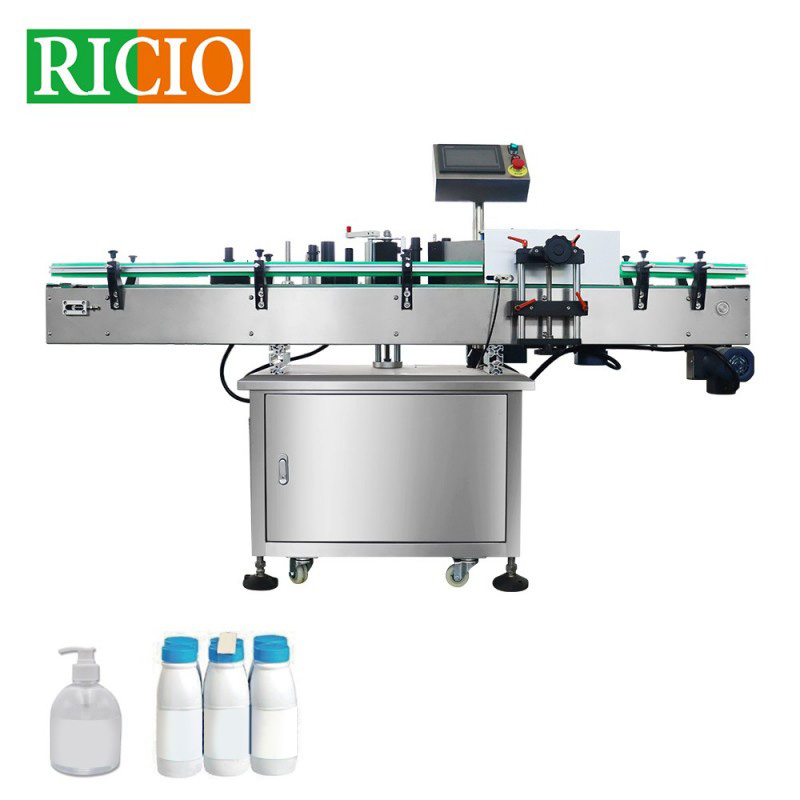 High-Speed Round Bottle Labeling Machine with ±1 mm AccuracyThis machine applies labels to cylindrical containers at up to 300 labels per minute, making it ideal for 24/7 production lines in food and beverage industries.View Product → from RICIO achieves up to 300 labels per minute while maintaining ±1 mm accuracy, making it a top choice for filling lines operating 24/7.
Food and beverage producers especially benefit from the wash‑down stainless steel variant. Learn about the complete line of round bottle labeling solutions for tailored options.
Double‑Side Labels – Square Bottles & Flat Cartons
When both front and back labels must be applied simultaneously, a double‑side label applicator reduces cycle time. The 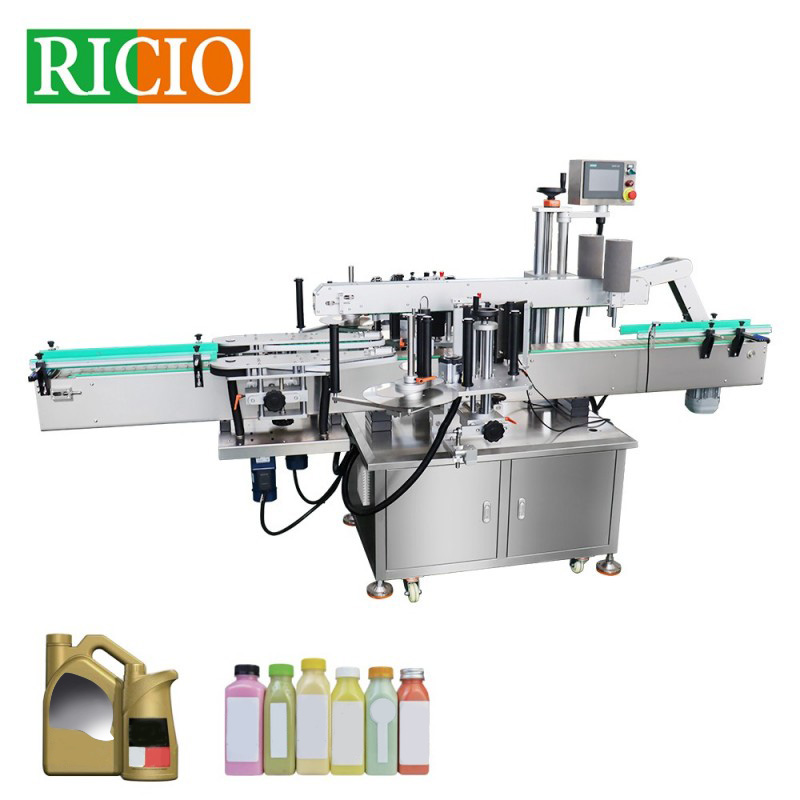 Servo-Driven Double Side Labeling Machine for Flat BottlesIt applies front and back labels simultaneously on flat or square bottles from 20 to 300 mm wide, at 80–150 pairs per minute, boosting efficiency in high-volume lines.View Product → uses twin servo‑driven heads that can be adjusted on the fly, supporting container widths from 20 mm to 300 mm. Typical throughput is 80–150 pairs per minute.
Top & Side Labels – Logistics & Assembly
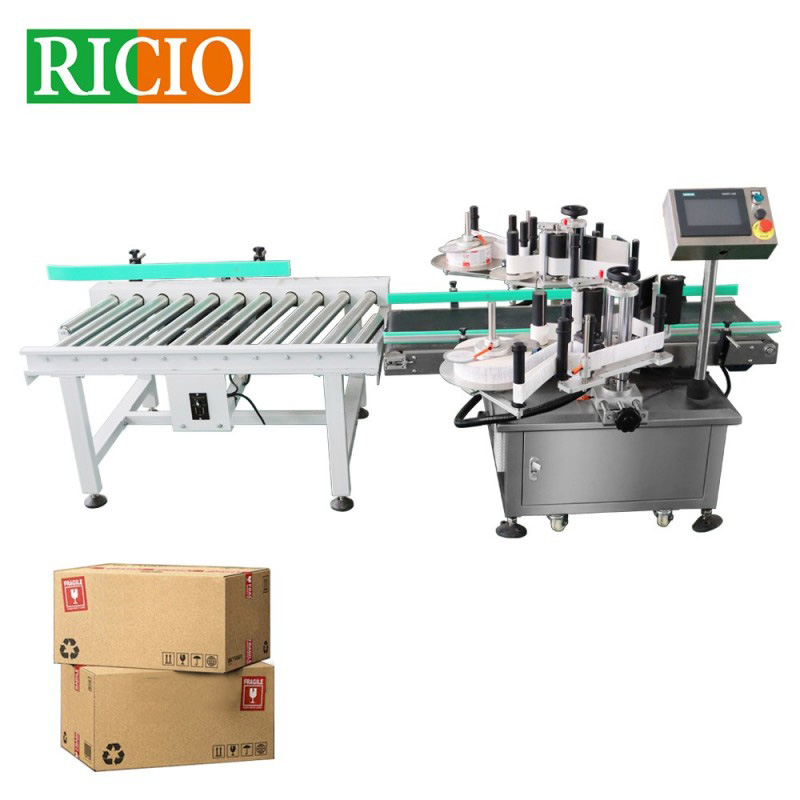
Warehouse and shipping departments often require a label on the top and one side of a box. A top‑side applicator with a corner module handles both in one pass. The 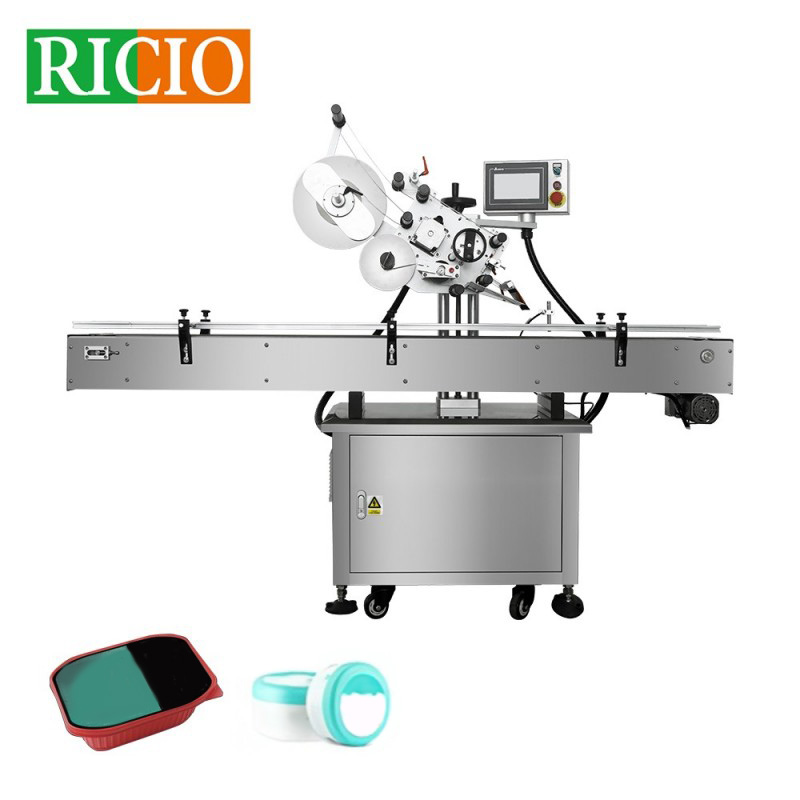 Automatic Top Labeling Machine for Logistics and WarehousingDesigned for applying labels to the top of boxes, this machine can integrate with a side applicator and barcode scanners to streamline shipping and reduce errors.View Product → series includes a side‑merge conveyor and can be integrated with barcode scanners for error‑proofing. For more details, refer to the logistics labeling solutions page.
Frequently Asked Questions (FAQ)
What is the difference between a label applicator and a labeling machine?
The terms are often used interchangeably, but a “label applicator” typically refers to the mechanical head that applies the label, while a “labeling machine” includes the conveyor, control system, and optional printers. In practice, most suppliers sell complete machines.
How fast can a label applicator run?
Speeds range from 20 labels per minute (manual tabletop units) to over 400 labels per minute (high‑speed rotary systems). The record in our 2026 line audits is 480 LPM on a dedicated beverage line. Always test with your real label stock because label release properties affect maximum speed.
Can one applicator handle multiple container shapes?
Yes, with changeover parts. Most modular machines accept different change‑part kits (pads, rollers, product guides) to switch between round, square, and flat containers. Typical changeover time is 15–30 minutes. If you run more than three distinct shapes daily, consider a rotating‑mount applicator.
What maintenance do label applicators require?
Daily cleaning of label dust from belts and sensors is essential. Weekly lubrication of pneumatic cylinders and monthly inspection of drive belts extend machine life. Servo‑driven machines typically require less maintenance than pneumatic ones. Always follow the manufacturer’s schedule—RICIO recommends a full service every 2,000 operating hours.
How much does a label applicator cost?
Entry‑level tabletop units start around $3,000. Mid‑range semi‑automatic systems run $8,000–$25,000. Fully automatic high‑speed lines with conveyors can exceed $60,000. Total cost of ownership should include label waste rate (typically 1–3%) and change‑part sets for each container type.

 +86 13681850339
 sales@raxpack.com
 Building 6, No. 477 Tiefeng Road, Baoshan District, Shanghai, China
- Tabletop Labeling Machine
- Round Bottle Labeling Machine
- Automatic Tube Labeling Machine
- Pouch Labeling Machine
- Rotary Labeling Machine
- Syringe Labeling Machine
- Top Labeling Machine
- Single Side Sticker Labeling Machine
- Double Side Labeling Machine
- Bucket Labeling Machine
- Bottom Labeling Machine
- Corner Label Applicator
- Waist Sealing Labeling Machine
- Square Bottle Labeling Machine
